|
|
The Pirate Radio Hall of Fame needs your
|
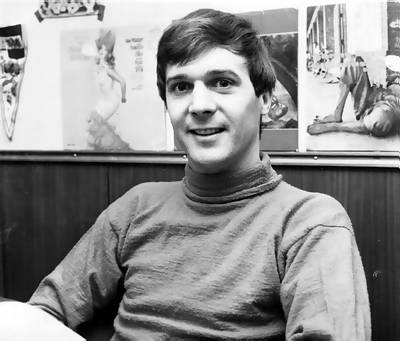
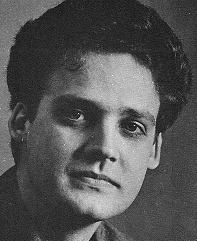
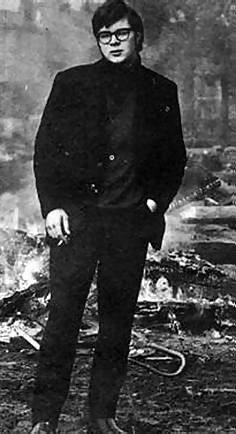
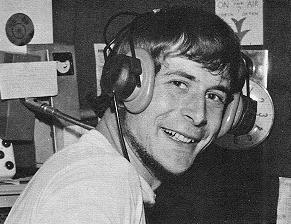 Richard Palmer Born in Wimbledon, London, on 29th March 1943, Dick's family moved to Kent when he was young. After completing his schooldays he took an apprenticeship and
worked in motor engineering. He joined the team on Radio Essex, the country's smallest offshore station, based on Knock John fort in the Thames, where he had his work cut out looking after the station's fairly basic technical
equipment as well as presenting programmes. He became senior disc-jockey and fort captain and stayed on as the station changed its name to BBMS. When it closed down at the end of 1966, he became road manager for Pink Floyd.
During the seventies he was heard on Radio Caroline while it was broadcasting off the coast of Holland (see The Pirate Radio Hall Of Fame ‘Seventies
Supplement’). Dick was also captain of the ship for a time. Since then he has worked for the Sultan of Oman and is an acting Lieutenant-Commander in the Omani Navy. He now runs an engineering company in Sussex. During
the summer of 2001 he returned to the air when he appeared on the Radio Northsea International restricted service broadcast. (This photo is from ‘Who's Who In Pop Radio’, published by The New English Library.
There is a more recent picture, taken at Caroline's 40th birthday party here and he also features in Roger Scott's Radio Essex photo album.)
Richard Palmer Born in Wimbledon, London, on 29th March 1943, Dick's family moved to Kent when he was young. After completing his schooldays he took an apprenticeship and
worked in motor engineering. He joined the team on Radio Essex, the country's smallest offshore station, based on Knock John fort in the Thames, where he had his work cut out looking after the station's fairly basic technical
equipment as well as presenting programmes. He became senior disc-jockey and fort captain and stayed on as the station changed its name to BBMS. When it closed down at the end of 1966, he became road manager for Pink Floyd.
During the seventies he was heard on Radio Caroline while it was broadcasting off the coast of Holland (see The Pirate Radio Hall Of Fame ‘Seventies
Supplement’). Dick was also captain of the ship for a time. Since then he has worked for the Sultan of Oman and is an acting Lieutenant-Commander in the Omani Navy. He now runs an engineering company in Sussex. During
the summer of 2001 he returned to the air when he appeared on the Radio Northsea International restricted service broadcast. (This photo is from ‘Who's Who In Pop Radio’, published by The New English Library.
There is a more recent picture, taken at Caroline's 40th birthday party here and he also features in Roger Scott's Radio Essex photo album.)
 Stuart Craigen has kindly sent us this clip of Richard Palmer on The Essex Beat Club from 1966 (duration 1 minute 53 seconds)
Richard Palmer on the Formula 67 show on BBMS and closing the station down for the night on 26th November 1966. The station normally operated 24 hours a day but, on this occasion, was having to close for engineering maintenance.
The theme music is Who's Afraid Of Virginia Wolf by The Graham Bond Organisation. Recording courtesy of www.azanorak.com. Our thanks to Ray Robinson (duration 4 minutes 31 seconds)
Stuart Craigen has kindly sent us this clip of Richard Palmer on The Essex Beat Club from 1966 (duration 1 minute 53 seconds)
Richard Palmer on the Formula 67 show on BBMS and closing the station down for the night on 26th November 1966. The station normally operated 24 hours a day but, on this occasion, was having to close for engineering maintenance.
The theme music is Who's Afraid Of Virginia Wolf by The Graham Bond Organisation. Recording courtesy of www.azanorak.com. Our thanks to Ray Robinson (duration 4 minutes 31 seconds)
 Richard Park Born on 10th March 1948 in Kirkcaldy, Fife, Richard became a journalist after finishing his education, working on the Fife News. He joined his local pirate
station, Radio Scotland, in September 1966 and used Wild Weekend by the Rocking Rebels as his theme tune. This track had
originally been recorded as a theme for American DJ Tom Shannon. After his time at sea he returned to his old job at the Fife News but was also heard on the BBC presenting the occasional Radio One Club programme. In
1973 he joined Glasgow's new Radio Clyde and stayed 14 years, becoming Head of Music. He moved to London's Capital Radio in 1987, also as Head of Music, rapidly rising to Programme Controller and then Group Programme Director,
overseeing all the various stations owned by the company. He still found time to file reports from London for the programme hosted by his old Radio Scotland colleague John Kerr on station 2UE in Sydney,
Australia. In March 2001 he resigned his position at Capital to work as a media consultant. He appeared in BBC TV's Fame Academy. After running
London's Magic, Richard was appointed Group Executive Director & Director of Broadcasting of Global Radio, a company which acquired many of the major commercial radio brands in the UK including Heart, Galaxy, Capital, Classic-FM
and Xfm (now called Radio X). There is a photo of Richard with three of his Radio Scotland colleagues, taken in 2005, here. (With many thanks to Raoul Verolleman for the photo. There is another vintage
picture of Richard here.)
Richard Park Born on 10th March 1948 in Kirkcaldy, Fife, Richard became a journalist after finishing his education, working on the Fife News. He joined his local pirate
station, Radio Scotland, in September 1966 and used Wild Weekend by the Rocking Rebels as his theme tune. This track had
originally been recorded as a theme for American DJ Tom Shannon. After his time at sea he returned to his old job at the Fife News but was also heard on the BBC presenting the occasional Radio One Club programme. In
1973 he joined Glasgow's new Radio Clyde and stayed 14 years, becoming Head of Music. He moved to London's Capital Radio in 1987, also as Head of Music, rapidly rising to Programme Controller and then Group Programme Director,
overseeing all the various stations owned by the company. He still found time to file reports from London for the programme hosted by his old Radio Scotland colleague John Kerr on station 2UE in Sydney,
Australia. In March 2001 he resigned his position at Capital to work as a media consultant. He appeared in BBC TV's Fame Academy. After running
London's Magic, Richard was appointed Group Executive Director & Director of Broadcasting of Global Radio, a company which acquired many of the major commercial radio brands in the UK including Heart, Galaxy, Capital, Classic-FM
and Xfm (now called Radio X). There is a photo of Richard with three of his Radio Scotland colleagues, taken in 2005, here. (With many thanks to Raoul Verolleman for the photo. There is another vintage
picture of Richard here.)
a very short clip of Richard Park introducing the Ceilidh programme on Radio Scotland, 8th August 1967. Thanks to Martyn Webster for the tape (duration 35 seconds)
Richard Park on the Swing Across Midday show on Radio Scotland, 1st August 1967. Recording courtesy of Manfred Steinkrauss (duration 3 minutes 35 seconds)
Richard Park on another Swing Across Midday programme on Radio Scotland from 8th August 1967. Recording kindly provided by Harm Koenders of The Offshore Radio Archive (duration 2 minutes 46 seconds)
 Brian Paull was working as road manager for pop singer ‘Screaming’ Lord Sutch. He was used to his boss's desire for publicity so when,
in 1964, Sutch decided to launch a pirate radio station, he did not take it too seriously. He knew it was just another stunt. But although it started that way, Sutch's manager, Reg Calvert, soon
began to take the idea seriously. He realised that it might work. So Brian found himself roped into becoming a broadcaster. Life on Radio Sutch was fairly basic and, on occasions, frightening. In an interview in Monitor
magazine, Brian told of how he was stuck on the station's Shivering Sands Fort alone: “I closed (the station) at about half past eleven. I had to refill the generator with petrol from the tank then close it down to save petrol.
So there I was in pitch black, just me and these creaking doors and the wind blowing through these steel towers. It was cold and dark and all these noises. The catwalks between the towers used to swing and they had never been oiled
since the war so they used to make terrifying noises.” Life was not all bad though and Brian used to enjoy sunbathing on the roof and swimming round the fort. You can hear a reference to Brian going for a dip on the
Lord Sutch audio clip. Jon Walker, a correspondent to The Pirate Radio Hall of Fame, worked on Radio Sutch and its successor Radio
City for a few weeks. He says: “I was a pretty crumby DJ! However it was a very exciting time in my life. Lord Sutch's road manager (Brian) was a DJ. I did save his life when he swam too far off the fort by hauling him back
in a small boat.” Brian obviously enjoyed his swimming but, sadly, Monitor reported that he drowned in an accident while on holiday in Greece in 1971. (The photo is by Syndication International from “Offshore
Radio” published by Iceni Enterprises.)
Brian Paull was working as road manager for pop singer ‘Screaming’ Lord Sutch. He was used to his boss's desire for publicity so when,
in 1964, Sutch decided to launch a pirate radio station, he did not take it too seriously. He knew it was just another stunt. But although it started that way, Sutch's manager, Reg Calvert, soon
began to take the idea seriously. He realised that it might work. So Brian found himself roped into becoming a broadcaster. Life on Radio Sutch was fairly basic and, on occasions, frightening. In an interview in Monitor
magazine, Brian told of how he was stuck on the station's Shivering Sands Fort alone: “I closed (the station) at about half past eleven. I had to refill the generator with petrol from the tank then close it down to save petrol.
So there I was in pitch black, just me and these creaking doors and the wind blowing through these steel towers. It was cold and dark and all these noises. The catwalks between the towers used to swing and they had never been oiled
since the war so they used to make terrifying noises.” Life was not all bad though and Brian used to enjoy sunbathing on the roof and swimming round the fort. You can hear a reference to Brian going for a dip on the
Lord Sutch audio clip. Jon Walker, a correspondent to The Pirate Radio Hall of Fame, worked on Radio Sutch and its successor Radio
City for a few weeks. He says: “I was a pretty crumby DJ! However it was a very exciting time in my life. Lord Sutch's road manager (Brian) was a DJ. I did save his life when he swam too far off the fort by hauling him back
in a small boat.” Brian obviously enjoyed his swimming but, sadly, Monitor reported that he drowned in an accident while on holiday in Greece in 1971. (The photo is by Syndication International from “Offshore
Radio” published by Iceni Enterprises.)
Brian Paull on Radio Sutch on 12th June 1964. The station broadcast on very low power. Apologies for the poor reception. Recording kindly provided by Hans Knot (duration 4 minutes 32 seconds)
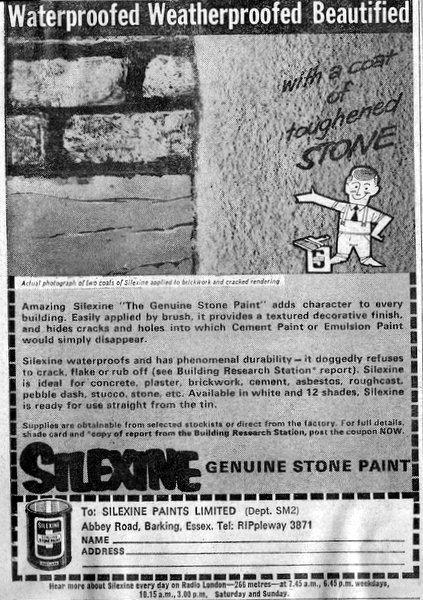 John Peel playing a Silexine advert on Radio London in July 1967 (duration 57 seconds)
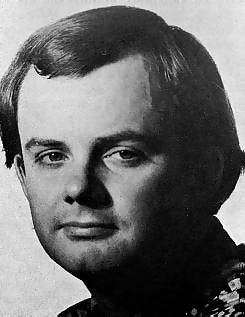 John Peel Born 30th August 1939, in Heswall, Cheshire, he was educated at Shrewsbury public school and did his National Service in the Royal Artillery. He then worked at
Townhead Mill in Rochdale, Lancashire, before moving to America. His first job there was with the Dallas Cotton Exchange but his love of the blues led to him making a guest appearance on a local radio station, WRR. When the
Beatles took off in America, an English accent, especially an almost Liverpudlian one, was much in demand. John became the resident Beatles expert on KLIF in Dallas. A full time job on KOMA in Oklahoma City followed, then
KMEN in San Bernardino. An unsuccessful marriage prompted his return to the UK where a neighbour of his mother's put him in touch with Radio London. On the basis of his experience on American radio, John was immediately given
a job and joined the station in March 1967. As always, the newest recruit had two air-shifts. John deputised for whichever DJ was on shore leave and presented the midnight-2am show. While working in America John had become very
aware of the music of the “underground”. It was the hippy era and dozens of new bands were emerging. John began to feature the best of this new music on his late night programme which came to be known as The Perfumed
Garden. It immediately won a large and loyal following and was hugely influential. He stayed with Radio London until its closedown when he became part of the founding team of
Radio One. He was with Radio One until his death - nearly forty years. He was constantly ahead of the pack, championing the new and the interesting. Too
many artistes to list got their big breaks on his show. John played all sorts of music - and usually before anyone else. During his long broadcasting career he also presented programmes for the World Service and BFBS, and hosted
Radio Four's Home Truths magazine programme. In January 1990 John was the castaway on Radio 4's Desert Island Discs. The programme is still available on the
BBC website. He was awarded an OBE in 1998. Radio
Academy, a trade body for people who work in the industry, has its own Hall of Fame honouring those who have made an outstanding contribution to UK radio. John Peel was inducted into this august group in December 2003. John died
suddenly in October 2004, while on holiday in Peru. He was 65. A report of his death is on the BBC website. There is a collaborative Wiki
site devoted to John and his career at peel.wikia.com/wiki and The Pirate Radio Hall of Fame's own tribute is
here. (Photo from ‘Beatwave’ magazine. Thanks to Chris for pointing out a couple of mistakes, now corrected.)
John Peel Born 30th August 1939, in Heswall, Cheshire, he was educated at Shrewsbury public school and did his National Service in the Royal Artillery. He then worked at
Townhead Mill in Rochdale, Lancashire, before moving to America. His first job there was with the Dallas Cotton Exchange but his love of the blues led to him making a guest appearance on a local radio station, WRR. When the
Beatles took off in America, an English accent, especially an almost Liverpudlian one, was much in demand. John became the resident Beatles expert on KLIF in Dallas. A full time job on KOMA in Oklahoma City followed, then
KMEN in San Bernardino. An unsuccessful marriage prompted his return to the UK where a neighbour of his mother's put him in touch with Radio London. On the basis of his experience on American radio, John was immediately given
a job and joined the station in March 1967. As always, the newest recruit had two air-shifts. John deputised for whichever DJ was on shore leave and presented the midnight-2am show. While working in America John had become very
aware of the music of the “underground”. It was the hippy era and dozens of new bands were emerging. John began to feature the best of this new music on his late night programme which came to be known as The Perfumed
Garden. It immediately won a large and loyal following and was hugely influential. He stayed with Radio London until its closedown when he became part of the founding team of
Radio One. He was with Radio One until his death - nearly forty years. He was constantly ahead of the pack, championing the new and the interesting. Too
many artistes to list got their big breaks on his show. John played all sorts of music - and usually before anyone else. During his long broadcasting career he also presented programmes for the World Service and BFBS, and hosted
Radio Four's Home Truths magazine programme. In January 1990 John was the castaway on Radio 4's Desert Island Discs. The programme is still available on the
BBC website. He was awarded an OBE in 1998. Radio
Academy, a trade body for people who work in the industry, has its own Hall of Fame honouring those who have made an outstanding contribution to UK radio. John Peel was inducted into this august group in December 2003. John died
suddenly in October 2004, while on holiday in Peru. He was 65. A report of his death is on the BBC website. There is a collaborative Wiki
site devoted to John and his career at peel.wikia.com/wiki and The Pirate Radio Hall of Fame's own tribute is
here. (Photo from ‘Beatwave’ magazine. Thanks to Chris for pointing out a couple of mistakes, now corrected.)
John Peel in The Perfumed Garden on Radio London on 18th July 1967. Tape courtesy of Ray Andrews (duration 3 minutes 6 seconds)
John Peel ending the last ever Perfumed Garden on Radio London on 14th August 1967. The programme had continued through the night on this one occasion and John was about to hand over to Chuck
Blair with the final Breakfast Show. Recording kindly provided by Albie Somerset (duration 3 minutes 45 seconds)
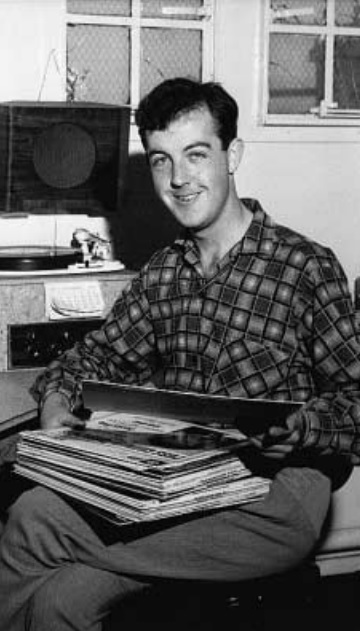
 Mac Peters One night in 1964, a Coventry club disc-jockey got into a fight. He turned up for work late - and with two black eyes. The manager took one look at him and refused
to let him go on stage like that. He was sent home and, instead, Peter the trainee manager was instructed to take over the “Off The Record” disc session. The young lad had never played a record on stage before but
gave it his best shot and the night proved a great success. So much so that, at the end of the evening, a man called Reg Calvert came over to see him. Calvert was in the venue to arrange a booking
for a group he managed called The Fortunes but he also owned a radio station. He had just taken over Radio Sutch and relaunched it as Radio City. He needed disc-jockeys and he offered Peter a job. They shook on it and Peter joined
Radio City. Calvert gave him a new name. Real name Peter MacDougall, he became ‘Mac Peters’ - a name he hated. Unfortunately this was not the start of a dream career. In his own words, at that time he was “a dreadful
disc-jockey”. Fortunately he got better. Mac lasted on the Radio City fort for just one stint - a total of three weeks. Although his offshore career was brief, he worked in broadcasting for many years. Having ditched the Mac
Peters name, he worked as Peter Madison on BBC local radio, the American Forces Network, WCFL in Chicago, WIRA in Florida, and a whole host of Irish stations. Later he lived in the west of Ireland producing commercials and jingles in
his home studio. He died in December 2018 after a short illness. (This photo dates from 1984 when Peter was working for South Coast Radio in Cork. Does anyone have a picture of him from his Radio City days?)
Mac Peters One night in 1964, a Coventry club disc-jockey got into a fight. He turned up for work late - and with two black eyes. The manager took one look at him and refused
to let him go on stage like that. He was sent home and, instead, Peter the trainee manager was instructed to take over the “Off The Record” disc session. The young lad had never played a record on stage before but
gave it his best shot and the night proved a great success. So much so that, at the end of the evening, a man called Reg Calvert came over to see him. Calvert was in the venue to arrange a booking
for a group he managed called The Fortunes but he also owned a radio station. He had just taken over Radio Sutch and relaunched it as Radio City. He needed disc-jockeys and he offered Peter a job. They shook on it and Peter joined
Radio City. Calvert gave him a new name. Real name Peter MacDougall, he became ‘Mac Peters’ - a name he hated. Unfortunately this was not the start of a dream career. In his own words, at that time he was “a dreadful
disc-jockey”. Fortunately he got better. Mac lasted on the Radio City fort for just one stint - a total of three weeks. Although his offshore career was brief, he worked in broadcasting for many years. Having ditched the Mac
Peters name, he worked as Peter Madison on BBC local radio, the American Forces Network, WCFL in Chicago, WIRA in Florida, and a whole host of Irish stations. Later he lived in the west of Ireland producing commercials and jingles in
his home studio. He died in December 2018 after a short illness. (This photo dates from 1984 when Peter was working for South Coast Radio in Cork. Does anyone have a picture of him from his Radio City days?)
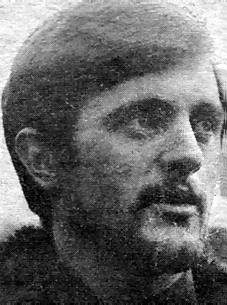 Brendan Power was born in Fethard on Sea, Ireland, on 7th September 1944. He moved to England in the early fifties and was educated at Tiverton Grammar School in Devon. His
early career was initially spent in the City, where he worked for a stockbroker, before joining Beaverbrook Newspapers. In the sixties he managed various pop groups including Episode Six which included Ian Gillan and Roger Glover,
later of Deep Purple. A story in the Daily Mirror of two disc-jockeys leaving Radio 270 because of the bad weather, and alleged poor sea worthiness of the ship, led him to apply for a job with the Yorkshire based station. Programme
Director Noel Miller turned him down but, when Miller returned to Australia, Brendan managed to convince station owner Wilf Proudfoot that he had been hired and had quit his job to take up this new
position. Fortunately Pete Bowman had just left and there was a vacancy so between Christmas and New Year 1966 he joined the ship. His theme tune was
Rocking Goose by Johnny & The Hurricanes. After a few months he left to take up a position with Radio Antilles in Montserrat,
the same station that Pete Bowman had joined. Here, at different times, Brendan was a disc-jockey, news editor, programme director and sales manager. He returned to the UK in November 1973 to join
BRMB Radio in Birmingham as commercial producer. After three years he switched career paths when he left to work in financial services. Brendan became one of the country's top sales people, a leading motivational speaker and was at
one time President of the Professional Speakers Association of Europe. He has compiled a book called From The Heart of Ireland, a collection of inspirational
stories in aid of charity. Another book, Heroes of the Helen Blake, is no longer available. (Many thanks to Brendan and Karl Jones for the above information. This photo is from ‘Rado News’. There is a
picture of Brendan with some of his Radio 270 colleagues in Guy Hamilton's photo album. and some more recent ones here.)
Brendan Power was born in Fethard on Sea, Ireland, on 7th September 1944. He moved to England in the early fifties and was educated at Tiverton Grammar School in Devon. His
early career was initially spent in the City, where he worked for a stockbroker, before joining Beaverbrook Newspapers. In the sixties he managed various pop groups including Episode Six which included Ian Gillan and Roger Glover,
later of Deep Purple. A story in the Daily Mirror of two disc-jockeys leaving Radio 270 because of the bad weather, and alleged poor sea worthiness of the ship, led him to apply for a job with the Yorkshire based station. Programme
Director Noel Miller turned him down but, when Miller returned to Australia, Brendan managed to convince station owner Wilf Proudfoot that he had been hired and had quit his job to take up this new
position. Fortunately Pete Bowman had just left and there was a vacancy so between Christmas and New Year 1966 he joined the ship. His theme tune was
Rocking Goose by Johnny & The Hurricanes. After a few months he left to take up a position with Radio Antilles in Montserrat,
the same station that Pete Bowman had joined. Here, at different times, Brendan was a disc-jockey, news editor, programme director and sales manager. He returned to the UK in November 1973 to join
BRMB Radio in Birmingham as commercial producer. After three years he switched career paths when he left to work in financial services. Brendan became one of the country's top sales people, a leading motivational speaker and was at
one time President of the Professional Speakers Association of Europe. He has compiled a book called From The Heart of Ireland, a collection of inspirational
stories in aid of charity. Another book, Heroes of the Helen Blake, is no longer available. (Many thanks to Brendan and Karl Jones for the above information. This photo is from ‘Rado News’. There is a
picture of Brendan with some of his Radio 270 colleagues in Guy Hamilton's photo album. and some more recent ones here.)
Brendan Power presenting the 9-midnight show on Radio 270, 30th December 1966, soon after joining the station. Tape kindly provided by Martyn Webster (duration 1 minute 35 seconds)
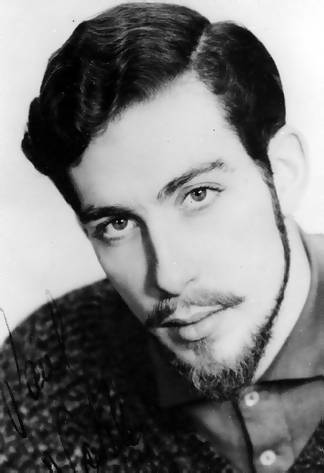
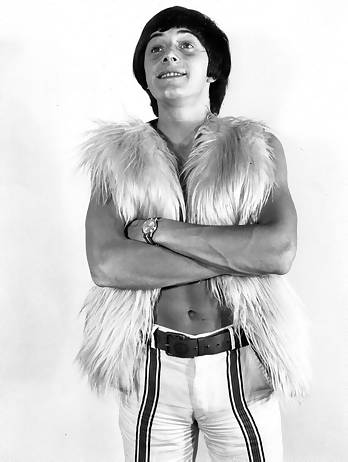 Tony Prince Born 9th May 1944, in Oldham, Lancashire, Tony is the only offshore personality to have been a real jockey before becoming a disc-jockey. This part of his career
was short and was followed by time as an apprentice toolmaker and member of a band called The Jasons. He became a club DJ and, while working in Bristol, presented an early ITV pop programme, Discs-a-Gogo. On one of the shows,
Tony Blackburn made an appearance to plug his latest record (the edition broadcast on Tuesday 7th September 1965, according to the TV
Pop Diaries website). Tony Prince asked him for a contact number for Radio Caroline. He phoned them, had an audition and joined the north ship at the end of 1965. He transferred to Caroline South briefly, presenting programmes
from the station's temporary home on the Swedish mv Cheeta II. This ship was on loan to the Caroline organisation while the Mi Amigo was being repaired, after losing its anchor and being washed up on the beach at Frinton-on-Sea.
Tony then returned to Caroline North and “your royal ruler” was one of the station's most popular presenters. He used a number of different theme tunes including two recorded by Sounds Incorporated: Go and
I'm Coming Through. Tony stayed until the introduction of the Marine Offences Act in August 1967. He went on to be Programme Director of Radio Luxembourg. Since then he has been heard on Capital Gold in London and Xtra-AM
in Birmingham. Tony was quick to spot the potential of club culture and started the very successful Disco-Mix Club and the spin-off magazine Mixmag. He sold the magazine but continued to operate the club which became
known as DMC World. The book The Royal Ruler & the Railway DJ by Tony and Jan Šesták was published in
hardback in December 2016. It tells the story of Radio Luxembourg from both sides of the Iron Curtain. Between April 2018 and May 2021 Tony operated United DJs Radio, an internet station he set up which featured a number of ex-pirates
and friends from his time on Radio Luxembourg. (Thanks to Robbie Dale for the photo. There are some articles about Tony's time with Radio Caroline in the fans' memorabilia section and some pictures taken
during his short stay on Caroline South here. Tony has also kindly shared some of his own photos from his time on Caroline North here. He also features in
Nick Bailey's photo album and home movies, and Sheridon Street's album. In July 2004 Tony attended the First North American Pirate Radio Reunion in
Vancouver, Canada. There are photos of the event here. He also attended the Offshore 50 reunion in August 2017. See also the
Manchester Beat site. As well as the audio, below, Tony can be heard in a clip on the Mick Luvzit tribute page.)
Tony Prince Born 9th May 1944, in Oldham, Lancashire, Tony is the only offshore personality to have been a real jockey before becoming a disc-jockey. This part of his career
was short and was followed by time as an apprentice toolmaker and member of a band called The Jasons. He became a club DJ and, while working in Bristol, presented an early ITV pop programme, Discs-a-Gogo. On one of the shows,
Tony Blackburn made an appearance to plug his latest record (the edition broadcast on Tuesday 7th September 1965, according to the TV
Pop Diaries website). Tony Prince asked him for a contact number for Radio Caroline. He phoned them, had an audition and joined the north ship at the end of 1965. He transferred to Caroline South briefly, presenting programmes
from the station's temporary home on the Swedish mv Cheeta II. This ship was on loan to the Caroline organisation while the Mi Amigo was being repaired, after losing its anchor and being washed up on the beach at Frinton-on-Sea.
Tony then returned to Caroline North and “your royal ruler” was one of the station's most popular presenters. He used a number of different theme tunes including two recorded by Sounds Incorporated: Go and
I'm Coming Through. Tony stayed until the introduction of the Marine Offences Act in August 1967. He went on to be Programme Director of Radio Luxembourg. Since then he has been heard on Capital Gold in London and Xtra-AM
in Birmingham. Tony was quick to spot the potential of club culture and started the very successful Disco-Mix Club and the spin-off magazine Mixmag. He sold the magazine but continued to operate the club which became
known as DMC World. The book The Royal Ruler & the Railway DJ by Tony and Jan Šesták was published in
hardback in December 2016. It tells the story of Radio Luxembourg from both sides of the Iron Curtain. Between April 2018 and May 2021 Tony operated United DJs Radio, an internet station he set up which featured a number of ex-pirates
and friends from his time on Radio Luxembourg. (Thanks to Robbie Dale for the photo. There are some articles about Tony's time with Radio Caroline in the fans' memorabilia section and some pictures taken
during his short stay on Caroline South here. Tony has also kindly shared some of his own photos from his time on Caroline North here. He also features in
Nick Bailey's photo album and home movies, and Sheridon Street's album. In July 2004 Tony attended the First North American Pirate Radio Reunion in
Vancouver, Canada. There are photos of the event here. He also attended the Offshore 50 reunion in August 2017. See also the
Manchester Beat site. As well as the audio, below, Tony can be heard in a clip on the Mick Luvzit tribute page.)
Tony Prince hosting the Midnight Surf Party on Radio Caroline North, early in his broadcasting career on 3rd January 1966. This is an edited version of a recording available from
www.azanorak.com. Our thanks to Ray Robinson (duration 4 minutes 8 seconds)
Tony Prince on Radio Caroline North from 13th August 1967, the day before the Marine Offences Act became law. It was Tony's last show, a fact pointed out by an interrupting Dave Lee Travis.
The voice on the advert for the transistor radio offer is that of Carl Conway. Tape kindly provided by Chris Baird (duration 4 minutes 5 seconds).
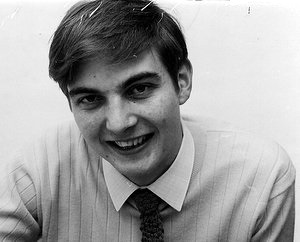 Mike Procter was heard on Radio City for a short time in February 1965 as a ‘trial DJ’. In the early days of the station, when money was tight but eager DJs
were plentiful, station owner Reg Calvert would invite potential broadcasters out to the fort for a short period, unpaid apart from their board and lodging. There were many ‘trial DJs’
on Radio City during 1965. Most of them are featured on The Pirate Radio Hall of Fame but there are others that we still have not tracked down. (It took over 40 years in Mike's case! If you worked
on City, please get in touch.) Mike says that his stay on Radio City was so brief that he has no ‘big picture’ memories to share just anecdotes like the blue plastic
bucket acting as a supporting insulator for the transmitting antenna, a minor transmitter fire adding to the feeling of being stuck out in the middle of nowhere, the sheer cold of being in a metal box in the Thames estuary in February,
and an oft repeated live-voiced advert for the new film The Sound of Music! Mike says he became “very fired up about radio and DJ-ing at the time”. His outlets for this in later years have been hospital radio,
mobile disco work and a community radio station in Oman but mostly his career has been in broadcast engineering. However, for the final 15 years until he retired in 2011, he was back behind the microphone. He managed a Christian
radio project making public service programmes for second language English users, broadcast on about sixty outlets internationally. These broadcasts involved voicing at about half speed yet still sounding natural. Mike's voice can
still be heard on some of the programmes (try Googling ‘Mike Procter Spotlight English’). He lives near Cambridge, married with two adult daughters. (Many thanks to Mike for the photo, the information and the
recording. We have a couple of photos of Mike at Radio City's 50th birthday gathering in Whitstable in September 2014.)
Mike Procter was heard on Radio City for a short time in February 1965 as a ‘trial DJ’. In the early days of the station, when money was tight but eager DJs
were plentiful, station owner Reg Calvert would invite potential broadcasters out to the fort for a short period, unpaid apart from their board and lodging. There were many ‘trial DJs’
on Radio City during 1965. Most of them are featured on The Pirate Radio Hall of Fame but there are others that we still have not tracked down. (It took over 40 years in Mike's case! If you worked
on City, please get in touch.) Mike says that his stay on Radio City was so brief that he has no ‘big picture’ memories to share just anecdotes like the blue plastic
bucket acting as a supporting insulator for the transmitting antenna, a minor transmitter fire adding to the feeling of being stuck out in the middle of nowhere, the sheer cold of being in a metal box in the Thames estuary in February,
and an oft repeated live-voiced advert for the new film The Sound of Music! Mike says he became “very fired up about radio and DJ-ing at the time”. His outlets for this in later years have been hospital radio,
mobile disco work and a community radio station in Oman but mostly his career has been in broadcast engineering. However, for the final 15 years until he retired in 2011, he was back behind the microphone. He managed a Christian
radio project making public service programmes for second language English users, broadcast on about sixty outlets internationally. These broadcasts involved voicing at about half speed yet still sounding natural. Mike's voice can
still be heard on some of the programmes (try Googling ‘Mike Procter Spotlight English’). He lives near Cambridge, married with two adult daughters. (Many thanks to Mike for the photo, the information and the
recording. We have a couple of photos of Mike at Radio City's 50th birthday gathering in Whitstable in September 2014.)
Mike Procter on his very first show for Radio City, 26th February 1965. He was 18 years old, had never broadcast before and, with no slip mats on the turntables, he admits it wasn't the slickest of shows. There were a few gaps
which we have tightened up. Thanks to Mike for the recording (duration 2 minutes 51 seconds).
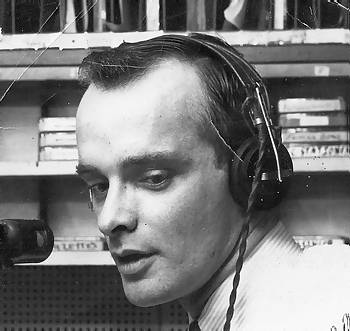 Harry Putnam (born 1936, Washington, D.C.) was an American airtime salesman who worked with and was heard on both Radio Essex and Britain Radio. Before heading to the UK
around 1965, he broadcast from the DC area on such stations as WDON, WEAM, WASH, WEEL, WIVE, WPIK and WTOW and served as General Manager at some of them. He became involved with Radio Essex very early in the station's life and
brought some high-powered salesmanship to the operation. (There are apocryphal stories that he had his car radio ‘tweaked’ so that Radio Essex's notoriously weak signal sounded louder than any other station on the
dial when he demonstrated it to prospective advertisers; and, allegedly, he could be known to play a client Radio 390's much more powerful output, claiming it was Radio Essex!) Although he was not a daily broadcaster on Radio
Essex, Harry's voice was heard on numerous commercials and he did occasionally present programmes from the Knock John fort. Many of the American records played on Radio Essex were from Harry's personal collection. In 1966 he
transferred to the Radio England/Britain Radio setup. Again he was mainly employed as an airtime salesman but he also found time to host the regular Sunday evening R&B Night Ride on Britain Radio under the name of
Johnny Dark. Following the end of the sixties era of offshore radio, we lost touch with Harry but his Britain Radio colleague Jack Curtiss tracked him down in June 2008.
He wrote at the time: “the irrepressible Dark Lord of the Night Ride (aka Harry Putnam) is alive and well, despite having a few strokes, and is living with his current wife, Cherl, in Pasadena, Maryland, not that far from Towson,
the Baltimore suburb where he worked on WTOW years ago.” From what we understand from Harry's family, after Britain Radio closed down in 1967, Harry, his second wife, Penelope, and infant daughter Michele moved back to
the Washington DC area and he worked as General Manager at WTOW and WEBB. By the seventies Harry had left broadcasting altogether but continued to work in the music business, selling recorded background music. He was one of the
top producers and eventually went on to own his own background music company, as well as operating several petrol stations, a satellite dish business and numerous other successful ventures. One of Harry's daughters, Michele
Trankovich, very kindly sent us this photo and other items of memorabilia from her father's career. Sadly Harry passed away in January 2019, aged 82. (Our grateful thanks to Jack, Michele and Harry. There
are some photos of Harry, taken in 2009 and 2011 with his old Britain Radio colleague Jack Curtiss, here.)
Harry Putnam (born 1936, Washington, D.C.) was an American airtime salesman who worked with and was heard on both Radio Essex and Britain Radio. Before heading to the UK
around 1965, he broadcast from the DC area on such stations as WDON, WEAM, WASH, WEEL, WIVE, WPIK and WTOW and served as General Manager at some of them. He became involved with Radio Essex very early in the station's life and
brought some high-powered salesmanship to the operation. (There are apocryphal stories that he had his car radio ‘tweaked’ so that Radio Essex's notoriously weak signal sounded louder than any other station on the
dial when he demonstrated it to prospective advertisers; and, allegedly, he could be known to play a client Radio 390's much more powerful output, claiming it was Radio Essex!) Although he was not a daily broadcaster on Radio
Essex, Harry's voice was heard on numerous commercials and he did occasionally present programmes from the Knock John fort. Many of the American records played on Radio Essex were from Harry's personal collection. In 1966 he
transferred to the Radio England/Britain Radio setup. Again he was mainly employed as an airtime salesman but he also found time to host the regular Sunday evening R&B Night Ride on Britain Radio under the name of
Johnny Dark. Following the end of the sixties era of offshore radio, we lost touch with Harry but his Britain Radio colleague Jack Curtiss tracked him down in June 2008.
He wrote at the time: “the irrepressible Dark Lord of the Night Ride (aka Harry Putnam) is alive and well, despite having a few strokes, and is living with his current wife, Cherl, in Pasadena, Maryland, not that far from Towson,
the Baltimore suburb where he worked on WTOW years ago.” From what we understand from Harry's family, after Britain Radio closed down in 1967, Harry, his second wife, Penelope, and infant daughter Michele moved back to
the Washington DC area and he worked as General Manager at WTOW and WEBB. By the seventies Harry had left broadcasting altogether but continued to work in the music business, selling recorded background music. He was one of the
top producers and eventually went on to own his own background music company, as well as operating several petrol stations, a satellite dish business and numerous other successful ventures. One of Harry's daughters, Michele
Trankovich, very kindly sent us this photo and other items of memorabilia from her father's career. Sadly Harry passed away in January 2019, aged 82. (Our grateful thanks to Jack, Michele and Harry. There
are some photos of Harry, taken in 2009 and 2011 with his old Britain Radio colleague Jack Curtiss, here.)
Harry Putnam on a Radio Essex commercial for Channel Airways. Recording courtesy of Andy Cadier (duration 35 seconds).
A promotion for Johnny Dark's R&B Night Ride from Britain Radio, 1967 (duration 37 seconds).