|
|
The Pirate Radio Hall of Fame needs your
|
Jim Henry An American disc-jockey, Jim joined the “Swinging” Radio England/Britain Radio operation in July 1966 but did not stay long. His colleague Bill Berry says: “He was one of the four guys that went over (to the UK) at the same time that included me. Strangely Jim and I were both working on-air shifts in Lewistown, Pennsylvania. He was on WMRF and I was on a competing station: WKVA. Neither of us knew the other had applied to SRE. The first time I saw him in London was just after I got off the plane and went to the Curzon Street offices. There he was. Neither of us could believe it. What a small world. By the way: Bill Vick had sent all 4 of us plane tickets (one way) to London. We finally got out to the ship but Jim only lasted a few days. I'm not ever sure he pulled a shift. He had some problems back home with a wife or girlfriend and had to leave in a rush. Sorry I don't remember any more detail than that.” (Our thanks to Bill and to Svenn Martinsen.)
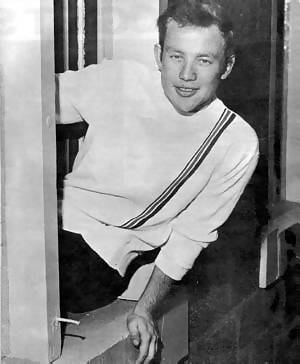
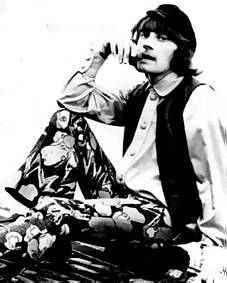 Stuart Henry Born in Edinburgh in February 1942, Stuart trained as an actor but joined Radio Scotland as soon as it started transmitting at the end of 1965. Unfortunately
he was never able to conquer his sea-sickness and was forced to pre-record his shows on land. As he was not stranded on the ship like his colleagues, he was available for gigs and he built up a large following through his
live road-show appearances. His theme tune was Soul Finger by The Bar-kays. Stuart joined Radio One at its launch and during the early seventies presented a very
successful Saturday morning show, later moving to Radio Luxembourg. With his softly-spoken intimate delivery, use of the catch-phrase “alright my friends” and obvious passion for music, he developed a unique and
instantly recognisable broadcasting style. As time went on his increasingly slurred delivery caused some listeners to suspect that he was drunk but, in fact, he had developed the incurable disease multiple sclerosis. For a
time he was able to carry on, with the help of his wife Ollie, but eventually the illness forced him to stop work. He continued to live in Luxembourg and made occasional public appearances in aid of MS research. In 1984 he
published Pirate Radio Then And Now which he co-wrote with Mike von Joel. He died at his home in Luxembourg on 24th November 1995. There is another picture of Stuart here and more photos and
another recording of Stuart on Radio Scotland here. A broadcasting industry organisation, the Radio Academy, has its own Hall
of Fame to honour people who have made an outstanding contribution to UK radio. On 2nd December 2004 Stuart Henry was posthumously inducted and joined a glittering list of great broadcasters. (This photo was sent to the
webmaster by Stuart during his time on Radio Scotland.)
Stuart Henry Born in Edinburgh in February 1942, Stuart trained as an actor but joined Radio Scotland as soon as it started transmitting at the end of 1965. Unfortunately
he was never able to conquer his sea-sickness and was forced to pre-record his shows on land. As he was not stranded on the ship like his colleagues, he was available for gigs and he built up a large following through his
live road-show appearances. His theme tune was Soul Finger by The Bar-kays. Stuart joined Radio One at its launch and during the early seventies presented a very
successful Saturday morning show, later moving to Radio Luxembourg. With his softly-spoken intimate delivery, use of the catch-phrase “alright my friends” and obvious passion for music, he developed a unique and
instantly recognisable broadcasting style. As time went on his increasingly slurred delivery caused some listeners to suspect that he was drunk but, in fact, he had developed the incurable disease multiple sclerosis. For a
time he was able to carry on, with the help of his wife Ollie, but eventually the illness forced him to stop work. He continued to live in Luxembourg and made occasional public appearances in aid of MS research. In 1984 he
published Pirate Radio Then And Now which he co-wrote with Mike von Joel. He died at his home in Luxembourg on 24th November 1995. There is another picture of Stuart here and more photos and
another recording of Stuart on Radio Scotland here. A broadcasting industry organisation, the Radio Academy, has its own Hall
of Fame to honour people who have made an outstanding contribution to UK radio. On 2nd December 2004 Stuart Henry was posthumously inducted and joined a glittering list of great broadcasters. (This photo was sent to the
webmaster by Stuart during his time on Radio Scotland.)
 Stuart Henry on an edition of Radio Scotland's Sunday record review programme Knockabout Pop from the summer of 1966. Tape kindly provided by Martyn Webster (duration 2 minutes 28 seconds)
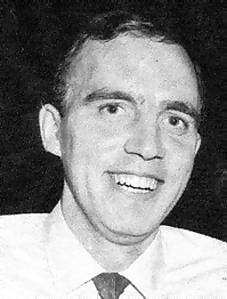 Bruce Holland was born in Hertfordshire on 6th October 1939. During his teenage years he played a tea-chest bass in a skiffle group and DJ'd at a local
nightclub. After working as the manager of a Brighton ten-pin bowling alley, he joined Radio Invicta on Red Sands Fort in December 1964 at the same time as John Ross-Barnard. They
arrived only a day or two after the owner, Tom Pepper, had drowned along with an engineer and disc-jockey Simon Ashley when their supply boat had sunk in a storm. Bruce was known as
“your long tall DJ,” being six foot four inches tall, and his theme tune was Rocking Goose by Johnny & The Hurricanes. In January 1965
Bruce fell badly on the fort and needed urgent medical attention. It was too stormy for a boat to reach him so a doctor was sent out by helicopter. In atrocious weather he was lowered on to Red Sands to stitch up
Bruce's wound. In February 1965 Radio Invicta closed down to be replaced, a month later, by King Radio. Before this could happen, however, Bruce was involved in another
drama. He and fellow DJ Roger Gomez, along with a young lad called Roy, were sent out to the fort to make test transmissions for the new station. And there they were left, forgotten
by their colleagues on shore. Their food supply ran out and they were reduced to living on whatever scraps remained in the old Radio Invicta larder. When Programme Controller Mike Raven
arrived to launch the new station he discovered them freezing cold and starving. They had been living on dehydrated peas for ten days. When his eventful time as a pirate was over, Bruce had several jobs in London
but never lost his love for radio. After retiring to the south coast with ill health, he was keen to join the various local radio stations that were opening up but sadly, before this could happen, his heart gave
out and he died peacefully while listening to the radio. (With very many thanks to Bruce's sister Wendy Haberl for providing this photograph, some recordings and the information. Brian Smith has also been in touch:
“Bruce and I worked together from mid-85 to mid-86 at International Thomson Publishing Ltd. His job title was something like Business Development Manager and he was a very good, friendly colleague. At the
time I was involved in two hospital radio stations so Bruce and I had a lot to talk about. Towards the end of my time there he had a heart attack but recovered to continue at ITPL ... He occasionally spoke of his
time at King and Invicta but never about the starvation episode. It probably brought back too many bad memories.”)
Bruce Holland was born in Hertfordshire on 6th October 1939. During his teenage years he played a tea-chest bass in a skiffle group and DJ'd at a local
nightclub. After working as the manager of a Brighton ten-pin bowling alley, he joined Radio Invicta on Red Sands Fort in December 1964 at the same time as John Ross-Barnard. They
arrived only a day or two after the owner, Tom Pepper, had drowned along with an engineer and disc-jockey Simon Ashley when their supply boat had sunk in a storm. Bruce was known as
“your long tall DJ,” being six foot four inches tall, and his theme tune was Rocking Goose by Johnny & The Hurricanes. In January 1965
Bruce fell badly on the fort and needed urgent medical attention. It was too stormy for a boat to reach him so a doctor was sent out by helicopter. In atrocious weather he was lowered on to Red Sands to stitch up
Bruce's wound. In February 1965 Radio Invicta closed down to be replaced, a month later, by King Radio. Before this could happen, however, Bruce was involved in another
drama. He and fellow DJ Roger Gomez, along with a young lad called Roy, were sent out to the fort to make test transmissions for the new station. And there they were left, forgotten
by their colleagues on shore. Their food supply ran out and they were reduced to living on whatever scraps remained in the old Radio Invicta larder. When Programme Controller Mike Raven
arrived to launch the new station he discovered them freezing cold and starving. They had been living on dehydrated peas for ten days. When his eventful time as a pirate was over, Bruce had several jobs in London
but never lost his love for radio. After retiring to the south coast with ill health, he was keen to join the various local radio stations that were opening up but sadly, before this could happen, his heart gave
out and he died peacefully while listening to the radio. (With very many thanks to Bruce's sister Wendy Haberl for providing this photograph, some recordings and the information. Brian Smith has also been in touch:
“Bruce and I worked together from mid-85 to mid-86 at International Thomson Publishing Ltd. His job title was something like Business Development Manager and he was a very good, friendly colleague. At the
time I was involved in two hospital radio stations so Bruce and I had a lot to talk about. Towards the end of my time there he had a heart attack but recovered to continue at ITPL ... He occasionally spoke of his
time at King and Invicta but never about the starvation episode. It probably brought back too many bad memories.”)
Bruce Holland on The Noon Show from Radio Invicta some time in late 1964 or early 1965. This studio recording was kindly provided by Wendy Haberl (duration 1 minute 35 seconds). For another recording of
Bruce see the King Radio page.
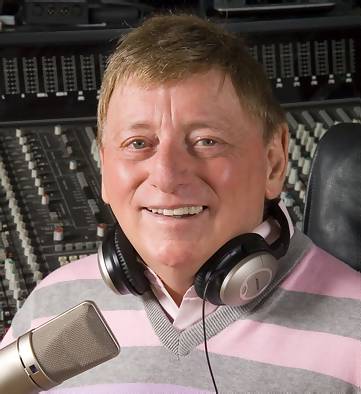 Paul Hollingdale Although best known for his long career with the BBC and commercial radio, Paul was also a very early pirate DJ - one of the UK's first. It
wasn't his start in show business though. That came at the age of nine when he was an ‘extra’ in the classic Richard Attenborough movie Brighton Rock. Paul's broadcasting career began while he was serving in the RAF in Germany in 1958. He worked as a DJ/Presenter at BFN (the British Forces Network, later known as BFBS).
In 1959 Paul was offered the opportunity of presenting the Cologne end of the BBC's long-running Sunday lunchtime request show Two Way Family Favourites. This lead him to return to the UK in 1960 to become a
full-time broadcaster. With only the BBC and Radio Luxembourg operating, jobs were in short supply and Paul found life difficult at first. However, through a former BFN colleague, Doug Stanley, he became involved with
CNBC. This was an English-language service broadcast from the Dutch Radio Veronica ship, anchored off Holland. (More about CNBC here.) Sadly the station's transmitter was not powerful enough
to win many listeners and CNBC did not last long. Paul then worked for Radio Luxembourg, initially presenting sponsored shows taped in London, later moving to the Grand Duchy to become one of their resident DJs. His was
the first voice to be heard when BBC Radio 2 opened for business on Saturday 30th September 1967 and Paul was one of the regular presenters of the station's Breakfast Special programme. He left Radio 2 in January
1970 and, during the next few years, worked as a freelance presenter for BBC Radio Brighton where he met local singer-songwriter Johnny Wakelin. Paul became his manager as Johnny's song Black Superman became a top 10 hit in the UK and all over the world. In March 1976 Paul joined Radio 210 Thames Valley, the local station in Reading. In 1979 he opened Blue Danube Radio, an
English-language station in Vienna. His association with BDR continued until 2000 when the station closed. During the eighties and nineties Paul was also heard on a number of other stations: London's LBC (a weekly film
show), Chiltern Radio (weekend presenter), and Radio Luxembourg (another series on movies). Paul was also part of the launch team for Britain's first country music station Country 1035 which opened in London in 1994. He
later moved to Vienna, Austria, where he worked as a broadcaster and film commentator for the ORF and others but he died on 5th July 2017. (With grateful thanks to Paul for his assistance and for supplying this
photo. There is also a picture of Paul, taken at the Radio Academy's ‘Celebration Of Offshore Radio’, here.)
Paul Hollingdale Although best known for his long career with the BBC and commercial radio, Paul was also a very early pirate DJ - one of the UK's first. It
wasn't his start in show business though. That came at the age of nine when he was an ‘extra’ in the classic Richard Attenborough movie Brighton Rock. Paul's broadcasting career began while he was serving in the RAF in Germany in 1958. He worked as a DJ/Presenter at BFN (the British Forces Network, later known as BFBS).
In 1959 Paul was offered the opportunity of presenting the Cologne end of the BBC's long-running Sunday lunchtime request show Two Way Family Favourites. This lead him to return to the UK in 1960 to become a
full-time broadcaster. With only the BBC and Radio Luxembourg operating, jobs were in short supply and Paul found life difficult at first. However, through a former BFN colleague, Doug Stanley, he became involved with
CNBC. This was an English-language service broadcast from the Dutch Radio Veronica ship, anchored off Holland. (More about CNBC here.) Sadly the station's transmitter was not powerful enough
to win many listeners and CNBC did not last long. Paul then worked for Radio Luxembourg, initially presenting sponsored shows taped in London, later moving to the Grand Duchy to become one of their resident DJs. His was
the first voice to be heard when BBC Radio 2 opened for business on Saturday 30th September 1967 and Paul was one of the regular presenters of the station's Breakfast Special programme. He left Radio 2 in January
1970 and, during the next few years, worked as a freelance presenter for BBC Radio Brighton where he met local singer-songwriter Johnny Wakelin. Paul became his manager as Johnny's song Black Superman became a top 10 hit in the UK and all over the world. In March 1976 Paul joined Radio 210 Thames Valley, the local station in Reading. In 1979 he opened Blue Danube Radio, an
English-language station in Vienna. His association with BDR continued until 2000 when the station closed. During the eighties and nineties Paul was also heard on a number of other stations: London's LBC (a weekly film
show), Chiltern Radio (weekend presenter), and Radio Luxembourg (another series on movies). Paul was also part of the launch team for Britain's first country music station Country 1035 which opened in London in 1994. He
later moved to Vienna, Austria, where he worked as a broadcaster and film commentator for the ORF and others but he died on 5th July 2017. (With grateful thanks to Paul for his assistance and for supplying this
photo. There is also a picture of Paul, taken at the Radio Academy's ‘Celebration Of Offshore Radio’, here.)
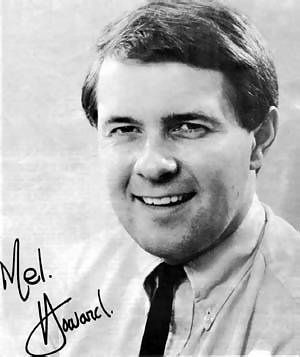 Mel Howard Born in Winnipeg, Canada, on 2nd July 1940, Mel left university at the age of 20 and became a “bad actor” for a year. He saved up $1,000 to study
music at the San Francisco State College but, instead, spent it on a trip to Europe. He arrived in Britain in 1961 and worked for EMI Records before continuing his travels by moving to Spain. On returning to the UK
he joined Air Canada but, fascinated by the emerging offshore radio scene, applied for work with a number of stations. Radio Caroline South gave him his big break in October 1965. Born Howard Melvin Hicks, reversing his first and
middle names gave an excellent DJ alias. Unfortunately for Mel his time on Caroline was short. At the end of the year Caroline South changed management and there was a wholesale purge of on-air personnel. He was out of a job.
Mel worked at the 100 Club in London's Oxford Street until March 1966 when he was offered a position on Radio Scotland. He stayed there until the station closed down in August 1967. His theme tune was My Star by The Frank
Chacksfield Orchestra. After his pirate days, Mel went back to Air Canada for a time before returning to Winnipeg. He was heard on CJOB while also studying for a degree in education. He then became a teacher - a job he continued
until retirement in 1999. In July 2004 Mel attended the First North American Pirate Radio Reunion in Vancouver, Canada. There are photos here. He also visited London for the Radio Academy
Celebration of Offshore Radio in August 2007. There are some pictures of Mel on Radio Caroline in Colin Nicol's photo album. He died on the 13th October 2022 from pulmonary
fibrosis. There is an obituary here. This is the article in the Winnipeg Free Press mentioned in the obituary. (Thanks to Steve Kirby, Hans Knot and Colin Johnson for supplying some of the above information and to Jim Sinclair for the photo from an issue
of ‘242’ magazine. As well as the recordings below, you can also hear two other small examples of Mel's work on a couple of Bryan Vaughan audio clips.)
Mel Howard Born in Winnipeg, Canada, on 2nd July 1940, Mel left university at the age of 20 and became a “bad actor” for a year. He saved up $1,000 to study
music at the San Francisco State College but, instead, spent it on a trip to Europe. He arrived in Britain in 1961 and worked for EMI Records before continuing his travels by moving to Spain. On returning to the UK
he joined Air Canada but, fascinated by the emerging offshore radio scene, applied for work with a number of stations. Radio Caroline South gave him his big break in October 1965. Born Howard Melvin Hicks, reversing his first and
middle names gave an excellent DJ alias. Unfortunately for Mel his time on Caroline was short. At the end of the year Caroline South changed management and there was a wholesale purge of on-air personnel. He was out of a job.
Mel worked at the 100 Club in London's Oxford Street until March 1966 when he was offered a position on Radio Scotland. He stayed there until the station closed down in August 1967. His theme tune was My Star by The Frank
Chacksfield Orchestra. After his pirate days, Mel went back to Air Canada for a time before returning to Winnipeg. He was heard on CJOB while also studying for a degree in education. He then became a teacher - a job he continued
until retirement in 1999. In July 2004 Mel attended the First North American Pirate Radio Reunion in Vancouver, Canada. There are photos here. He also visited London for the Radio Academy
Celebration of Offshore Radio in August 2007. There are some pictures of Mel on Radio Caroline in Colin Nicol's photo album. He died on the 13th October 2022 from pulmonary
fibrosis. There is an obituary here. This is the article in the Winnipeg Free Press mentioned in the obituary. (Thanks to Steve Kirby, Hans Knot and Colin Johnson for supplying some of the above information and to Jim Sinclair for the photo from an issue
of ‘242’ magazine. As well as the recordings below, you can also hear two other small examples of Mel's work on a couple of Bryan Vaughan audio clips.)
Mel Howard opening up “Radio Scotland and Ireland”, 12.30pm on Saturday 9th April 1967. Following prosecution for broadcasting inside territorial waters, the Comet had moved to a new anchorage. Bad weather
caused delays but, after nearly a month's silence, the station re-opened, with a new name, off the coast of Northern Ireland (duration 1 minute 7 seconds)
Mel Howard reading a short poem he had written, on his last show, on the final day of Radio Scotland, 14th August 1967. Both recordings are from a documentary about the station made by the Forth hospital radio
network in 1968 (duration 48 seconds)
Shaun Howard was one of the many disc-jockeys who featured briefly on Radio City. He writes: “I have just come across your website and it reminded me of the
time that I spent two weeks as a DJ on Radio City along with Chris Cross. Pet Clark's Downtown was number 2 in the charts so it
must have been during the first two weeks of November 1964 that I was there - unpaid of course. I found the experience amazing and one that will always remain with me. (Station owner) Reg Calvert
tried to get me to come back but I had a record shop in Victoria to run and I just couldn't spare the time. And the pay was non-existent. I went on to run my record shop until 1982 when I gave up to become an investment
adviser which I still do to this day.” Many thanks to Shaun for getting in touch.