|
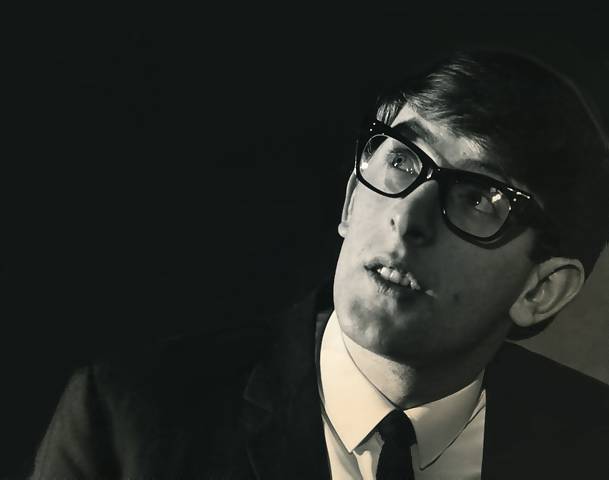 John Edward Birthdate 31st October 1945. On 5th March 1965 Parlophone Records released a single called I Pity The
Fool, a cover version of a Bobby Bland song, performed by The Manish Boys. Lead singer with the group was one David Jones, later to find fame as David Bowie. The single was not a hit and The Manish Boys soon went
their separate ways. While the singer carried on performing, two of the other band members decided on a change of career. The guitarist, Johnny Flux, and the sax player, Woolf
Byrne, both joined Radio City. (John very kindly sent us this photo of himself on Radio City's roof.) His theme tune was Sweet Dreams
by The Shadows. Johnny enjoyed his time on Radio City (he has written about it here) but, after a few months on Shivering Sands Fort, he applied for a job with a larger station. In November 1965 he
transferred to Radio London. Programme Director Ben Toney persuaded him to change his name and he chose to broadcast there using his two Christian names as “John Edward.” John stayed with the
station until the following July but never had a regular time slot. He deputised for whichever disc-jockey was on shore leave. He had a presentation style frequently compared to a young Alan Freeman although John wrote in a Radio
London column in Disc magazine that he could not see the similarity himself. Among the theme tunes he used on Big L was Busy Bee by Buddy Merrill, as heard on the
recording below, and Lightning Bug by the Brass Ring. Following his career at sea, he returned to the music business. His record company, Hollywood Records, became the first ever independent label to reach the number one
slot when Renée and Renato's much reviled Save Your Love stayed there for four weeks at Christmas 1982. John told us “the song was written as a joke, to
give the finger to Save Your Kisses For Me by Brotherhood Of Man among other tracks that made me chew the carpet.” John was also responsible for creating the robot Metal Mickey, the star of a successful Saturday evening
children's television series, directed by former Monkee Mickey Dolenz. For a picture of John on Radio London, see Willy Walker's photo album. John also very kindly sent us a previously unpublished
promotional photo from the sixties. We have more recent snaps of John at the Radio London 40th birthday party and the Offshore 50 reunion but sadly
John passed away on 23rd October 2021 aged 76. Correspondent Graham Kirk wrote: “During the early 2000s John had an involvement with one of the trial community stations, Sound Radio, that I was programme managing. He produced
some fine and creative programmes for the station and was a joy to work with. While he was happy to talk about his past experiences in the music industy and radio, his main passion was to revive Metal Mickey's fortunes. Johnny made a
distictive contribution to popular culture and more importantly put a smile on many faces over the last half century.” (Thanks to Kees Brinkerink and Alan Field for the theme tune information and to Graham Kirk for his
contribution.)
John Edward Birthdate 31st October 1945. On 5th March 1965 Parlophone Records released a single called I Pity The
Fool, a cover version of a Bobby Bland song, performed by The Manish Boys. Lead singer with the group was one David Jones, later to find fame as David Bowie. The single was not a hit and The Manish Boys soon went
their separate ways. While the singer carried on performing, two of the other band members decided on a change of career. The guitarist, Johnny Flux, and the sax player, Woolf
Byrne, both joined Radio City. (John very kindly sent us this photo of himself on Radio City's roof.) His theme tune was Sweet Dreams
by The Shadows. Johnny enjoyed his time on Radio City (he has written about it here) but, after a few months on Shivering Sands Fort, he applied for a job with a larger station. In November 1965 he
transferred to Radio London. Programme Director Ben Toney persuaded him to change his name and he chose to broadcast there using his two Christian names as “John Edward.” John stayed with the
station until the following July but never had a regular time slot. He deputised for whichever disc-jockey was on shore leave. He had a presentation style frequently compared to a young Alan Freeman although John wrote in a Radio
London column in Disc magazine that he could not see the similarity himself. Among the theme tunes he used on Big L was Busy Bee by Buddy Merrill, as heard on the
recording below, and Lightning Bug by the Brass Ring. Following his career at sea, he returned to the music business. His record company, Hollywood Records, became the first ever independent label to reach the number one
slot when Renée and Renato's much reviled Save Your Love stayed there for four weeks at Christmas 1982. John told us “the song was written as a joke, to
give the finger to Save Your Kisses For Me by Brotherhood Of Man among other tracks that made me chew the carpet.” John was also responsible for creating the robot Metal Mickey, the star of a successful Saturday evening
children's television series, directed by former Monkee Mickey Dolenz. For a picture of John on Radio London, see Willy Walker's photo album. John also very kindly sent us a previously unpublished
promotional photo from the sixties. We have more recent snaps of John at the Radio London 40th birthday party and the Offshore 50 reunion but sadly
John passed away on 23rd October 2021 aged 76. Correspondent Graham Kirk wrote: “During the early 2000s John had an involvement with one of the trial community stations, Sound Radio, that I was programme managing. He produced
some fine and creative programmes for the station and was a joy to work with. While he was happy to talk about his past experiences in the music industy and radio, his main passion was to revive Metal Mickey's fortunes. Johnny made a
distictive contribution to popular culture and more importantly put a smile on many faces over the last half century.” (Thanks to Kees Brinkerink and Alan Field for the theme tune information and to Graham Kirk for his
contribution.)
 A a very short clip of Johnny Flux on Radio City from August 1965. Recording kindly provided by Karl Jones (duration 21 seconds)
John Edward, as he was now known, sitting in for Tony Windsor on Radio London from the morning of 20th December 1965. This clip is taken from a recording shared on The Offshore Radio Club Forum by Hans Hendriks. Our thanks to him (duration 3 minutes 30 seconds)
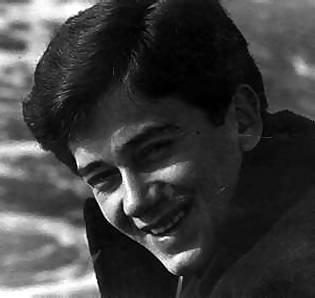 Tom Edwards was born in Norwich on 20th March 1945. He first appeared on the air at the age of 18 when he was the announcer on a Border Television programme Beat On The
Border. In 1964 he was working as a ‘blue coat’ at a Pontin's holiday camp when he heard Radio Caroline which had just started broadcasting off the coast. He began to play requests for holiday makers over the camp's
Tannoy system. He sent a tape of one of his shows to Radio City who gave him a job. Tom joined City in September 1965 and eventually became senior DJ. He was known as “Tatty Tom” because he was always so immaculately
dressed, even when on a rusting anti-aircraft fort miles from civilization. He used a couple of different theme tunes during his time with the station: Wigwam by the Ted Heath Orchestra and Skyliner by the
Mitch Murray Clan. When Radio City was taken to court and closed down in February 1967, Tom joined Radio Caroline South where he stayed until August and the passing of the Marine Offences Act. On Caroline
his theme tune was Las Vegas Scene by Wes Dakus and the Rebels. (Thanks to Stuart Aiken and Keith Hampshire for the detective work.) Following his time at sea Tom became a regular on BBC local
television and radio in East Anglia. This was followed by BBC Radios One and Two for many years as well as shifts as a continuity announcer on Thames TV. There are a number of clips of him appearing on Thames available on the
TV Ark website. Despite some well publicised problems with alcohol which interrupted his career, he fought back with help from Bob Monkhouse and was heard on five series of
the comedian's TV show Wipeout. At New Year 2004 he presented programmes for BBC Radio Norfolk and Saga Radio and in April he joined in the fun on Pirate BBC Essex. In June 2004 The
Pirate Radio Hall of Fame received an email from Tatty Tom: “Hi guys, into week 9 of having this pc so still learning my way around! Your info is amazing ... Came across the Shivering Sands pics
being built in Gravesend ... Fascinating stuff. They were my ‘home’ for a long time as Radio City of course. When filming for Anglia TV for the 40th anniversary I said to the crew ‘if only I could do it just one more
time’. My wish was granted with going out on the LV18 to do a show for Pirate BBC Essex. What with the Caroline reunion and then broadcasting was a weird, wonderful experience which I would not have missed for the world, right?
Especially out in the North Sea. Seeing faces and hearing voices from my distant past was awesome. So what goes around ... comes around ... just like the vinyl we played sometimes in a storm force ten. My long awaited book This Is
No Rehearsal is creeping up the publisher's pile. Started writing it back in 1995 and I pull no punches in both my personal and professional life. In other words a case of the good, bad and, at times, very ugly. Name names too.
These day I live a ‘slowed-down’ life in a small village called Heckington in Lincolnshire. When the phone rings it could be Nottingham, London, the North Sea or Hollywood ... well travel is the best form of education
right? I only work now when asked to. Made a welcome return home to Norwich to do a New Years Day show for Radio Norfolk. Also sat in for my old mate ‘Diddy’ David Hamilton over at Saga in Nottingham. Pleased to say I
don't think I've lost my touch.” Tom autobiography was published in 2018 although the name was changed. It became Is Anybody There?.
Sadly Tom died on 25th October 2025 after losing a battle with cancer. Our tribute to him can be found here. (Many thanks to Raoul Verolleman for the photo, to Martyn Webster for correcting the theme
tune details, to Robert Clark, Mary Payne and David Clayton for their assistance and, of course, to Tom himself. There are more pictures of Tom in Keith Hampshire's, Bill Price's and
Sheridon Street's photo albums, and some more recent ones, taken at Caroline's 40th birthday party, here. We previously posted an incorrect birthdate. Apologies to Tom for adding
on that extra year and thanks to Russ Ganderson for pointing out the error.)
Tom Edwards was born in Norwich on 20th March 1945. He first appeared on the air at the age of 18 when he was the announcer on a Border Television programme Beat On The
Border. In 1964 he was working as a ‘blue coat’ at a Pontin's holiday camp when he heard Radio Caroline which had just started broadcasting off the coast. He began to play requests for holiday makers over the camp's
Tannoy system. He sent a tape of one of his shows to Radio City who gave him a job. Tom joined City in September 1965 and eventually became senior DJ. He was known as “Tatty Tom” because he was always so immaculately
dressed, even when on a rusting anti-aircraft fort miles from civilization. He used a couple of different theme tunes during his time with the station: Wigwam by the Ted Heath Orchestra and Skyliner by the
Mitch Murray Clan. When Radio City was taken to court and closed down in February 1967, Tom joined Radio Caroline South where he stayed until August and the passing of the Marine Offences Act. On Caroline
his theme tune was Las Vegas Scene by Wes Dakus and the Rebels. (Thanks to Stuart Aiken and Keith Hampshire for the detective work.) Following his time at sea Tom became a regular on BBC local
television and radio in East Anglia. This was followed by BBC Radios One and Two for many years as well as shifts as a continuity announcer on Thames TV. There are a number of clips of him appearing on Thames available on the
TV Ark website. Despite some well publicised problems with alcohol which interrupted his career, he fought back with help from Bob Monkhouse and was heard on five series of
the comedian's TV show Wipeout. At New Year 2004 he presented programmes for BBC Radio Norfolk and Saga Radio and in April he joined in the fun on Pirate BBC Essex. In June 2004 The
Pirate Radio Hall of Fame received an email from Tatty Tom: “Hi guys, into week 9 of having this pc so still learning my way around! Your info is amazing ... Came across the Shivering Sands pics
being built in Gravesend ... Fascinating stuff. They were my ‘home’ for a long time as Radio City of course. When filming for Anglia TV for the 40th anniversary I said to the crew ‘if only I could do it just one more
time’. My wish was granted with going out on the LV18 to do a show for Pirate BBC Essex. What with the Caroline reunion and then broadcasting was a weird, wonderful experience which I would not have missed for the world, right?
Especially out in the North Sea. Seeing faces and hearing voices from my distant past was awesome. So what goes around ... comes around ... just like the vinyl we played sometimes in a storm force ten. My long awaited book This Is
No Rehearsal is creeping up the publisher's pile. Started writing it back in 1995 and I pull no punches in both my personal and professional life. In other words a case of the good, bad and, at times, very ugly. Name names too.
These day I live a ‘slowed-down’ life in a small village called Heckington in Lincolnshire. When the phone rings it could be Nottingham, London, the North Sea or Hollywood ... well travel is the best form of education
right? I only work now when asked to. Made a welcome return home to Norwich to do a New Years Day show for Radio Norfolk. Also sat in for my old mate ‘Diddy’ David Hamilton over at Saga in Nottingham. Pleased to say I
don't think I've lost my touch.” Tom autobiography was published in 2018 although the name was changed. It became Is Anybody There?.
Sadly Tom died on 25th October 2025 after losing a battle with cancer. Our tribute to him can be found here. (Many thanks to Raoul Verolleman for the photo, to Martyn Webster for correcting the theme
tune details, to Robert Clark, Mary Payne and David Clayton for their assistance and, of course, to Tom himself. There are more pictures of Tom in Keith Hampshire's, Bill Price's and
Sheridon Street's photo albums, and some more recent ones, taken at Caroline's 40th birthday party, here. We previously posted an incorrect birthdate. Apologies to Tom for adding
on that extra year and thanks to Russ Ganderson for pointing out the error.)
“Tatty” Tom Edwards on Radio City from Saturday morning 13th August 1966. Tape kindly provided by Stuart Russell (duration 1 minute 58 seconds)
Tom Edwards on the lunchtime show from Radio Caroline South, 2nd August 1967, with interjections from Keith Hampshire and Robbie Dale. Recording courtesy of Albie Somerset
(duration 4 minutes 41 seconds).
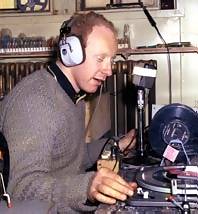 Paul Elvey was an engineer and presenter on Radio Sutch and stayed on as the station became Radio City. We asked if anyone could give us some information about Paul and the
man himself got in touch. So, in his own words, this is his story: “Prior to working for Radio Sutch I was working on various engineering projects in various parts of the world, getting rather fed up with always being away
from home for long periods, even though the money was pretty good. While I was between assignments, I had heard about the new pirate radio thing and tried tuning in to a station on my car radio. I managed to tune into a very weak
signal from Radio Sutch. In between the music came an advert appealing for an electrical engineer with particular experience of power generation. I went to an interview with Reg Calvert. We seemed to
hit it off quite well. He offered me a good salary with one week on, one week off. That, for me, was pretty damn good. It has to be appreciated that, in order to get a large amount of RF power to pump out of an aerial system using
medium wave, you must have plenty of electrical power available. And to do this from a small site is quite an engineering challenge. Shivering Sands was actually an excellent site because, once we had re-built the interconnecting
suspension bridges, we actually had a very large site. This allowed us to erect a very good mast with plenty of height. But of course initially we only had one tower. The existing bridges were quite dangerous to use. When I arrived
at the Towers I discovered that the power system was a load of lorry batteries and an ex-army 24 volt field generator. I explained the hopelessness of the situation to Reg, that he could never hope to pump out a strong signal unless
he had some decent power to start with. What we needed was a mains voltage generator to power a proper transmitter and also we could re-instate all the electrical services on the towers. Reg agreed ... We knew that a decent aerial
was a must. Good old Reg sent out a mass of scaffold poles so that we could build our own. It did work pretty well but of course it couldn't stand up to the weather. The first real gale and the whole lot came crashing down. We then
had a proper aerial delivered and we erected it with the riggers. As we had the five towers we were able to use the other towers for the guy ropes. This allowed for a very high mast, something the floating pirates couldn't achieve.
(Although I joined as an engineer) I actually did more DJ work than most of the regular DJs. The reason for this was due to the warm up time required by the transmitter. I would turn it on about an hour before official start time
but at quarter power then, after a while, half then full power. During this time I would DJ and I strangely acquired quite a following. I also did a show or two during the week and at weekends.” Following the raid on Shivering
Sands, Radio City's fort, Paul left the station. He says: “I work now as an electrical engineer on research work. We are currently working on a new type of waste incinerator. The prototype is in Germany where I often work. It
operates at much higher temperatures than the normal incinerator. This avoids the toxic ash. The other project that we have on stream is a helicopter powered by hydrogen peroxide so I'm still pretty busy.” (Many thanks to
Paul for getting in touch and to Eric Jay for the photo. You can see more of Eric's pictures in his photo album. You can see a more recent photo of Paul taken at the Radio Academy
Celebration of Offshore Radio in August 2007 here. He also attended the Offshore 50 reunion in August 2017.)
Paul Elvey was an engineer and presenter on Radio Sutch and stayed on as the station became Radio City. We asked if anyone could give us some information about Paul and the
man himself got in touch. So, in his own words, this is his story: “Prior to working for Radio Sutch I was working on various engineering projects in various parts of the world, getting rather fed up with always being away
from home for long periods, even though the money was pretty good. While I was between assignments, I had heard about the new pirate radio thing and tried tuning in to a station on my car radio. I managed to tune into a very weak
signal from Radio Sutch. In between the music came an advert appealing for an electrical engineer with particular experience of power generation. I went to an interview with Reg Calvert. We seemed to
hit it off quite well. He offered me a good salary with one week on, one week off. That, for me, was pretty damn good. It has to be appreciated that, in order to get a large amount of RF power to pump out of an aerial system using
medium wave, you must have plenty of electrical power available. And to do this from a small site is quite an engineering challenge. Shivering Sands was actually an excellent site because, once we had re-built the interconnecting
suspension bridges, we actually had a very large site. This allowed us to erect a very good mast with plenty of height. But of course initially we only had one tower. The existing bridges were quite dangerous to use. When I arrived
at the Towers I discovered that the power system was a load of lorry batteries and an ex-army 24 volt field generator. I explained the hopelessness of the situation to Reg, that he could never hope to pump out a strong signal unless
he had some decent power to start with. What we needed was a mains voltage generator to power a proper transmitter and also we could re-instate all the electrical services on the towers. Reg agreed ... We knew that a decent aerial
was a must. Good old Reg sent out a mass of scaffold poles so that we could build our own. It did work pretty well but of course it couldn't stand up to the weather. The first real gale and the whole lot came crashing down. We then
had a proper aerial delivered and we erected it with the riggers. As we had the five towers we were able to use the other towers for the guy ropes. This allowed for a very high mast, something the floating pirates couldn't achieve.
(Although I joined as an engineer) I actually did more DJ work than most of the regular DJs. The reason for this was due to the warm up time required by the transmitter. I would turn it on about an hour before official start time
but at quarter power then, after a while, half then full power. During this time I would DJ and I strangely acquired quite a following. I also did a show or two during the week and at weekends.” Following the raid on Shivering
Sands, Radio City's fort, Paul left the station. He says: “I work now as an electrical engineer on research work. We are currently working on a new type of waste incinerator. The prototype is in Germany where I often work. It
operates at much higher temperatures than the normal incinerator. This avoids the toxic ash. The other project that we have on stream is a helicopter powered by hydrogen peroxide so I'm still pretty busy.” (Many thanks to
Paul for getting in touch and to Eric Jay for the photo. You can see more of Eric's pictures in his photo album. You can see a more recent photo of Paul taken at the Radio Academy
Celebration of Offshore Radio in August 2007 here. He also attended the Offshore 50 reunion in August 2017.)
A couple of clips of Paul Elvey from the very earliest days of his broadcasting career on Radio Sutch - alone on Shivering Sands in August 1964. Recording kindly provided by Nick Widdowes (duration 2 minute 42 seconds)
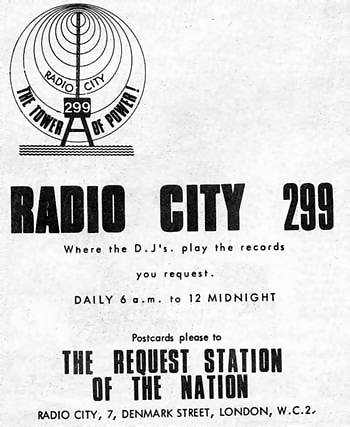
Thanks to Martin Fokkens for this press advert.
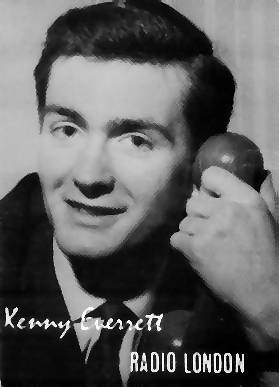 Kenny Everett Offshore radio's greatest genius was born Maurice James Christopher Cole on Christmas Day 1944 in Liverpool. He attended the same school as
Mike Ahern and considered joining the church but his first job was in a bakery. With a passion for radio and playing around with tape recorders, he sent a tape of a home-made programme to
the BBC. This interested the Corporation enough to invite him down to London and he was interviewed on the Home Service's Midweek programme. Kenny hoped it would lead to a job with the BBC but it did not. (More about
this period of his life here.) Instead of the BBC, he joined the new Radio London when it launched at Christmas 1964. He chose his new name from that of the Hollywood actor Edward Everett Horton and both
his own show and the double headed programme he co-presented with Dave Cash, The Kenny and Cash Show, won a massive following. Kenny used a number of different theme tunes. Thanks to offshore
historian Hans Knot for identifying one of them as Percolater Twist by Billy Joe and the Checkmates, an American hit from 1962. Kenny's writing and tape-editing skills were
phenomenal and he was responsible for many of Radio London's more creative advertisements, jingles and promotions. Unfortunately his humour was not always appreciated by the management and he was fired for six months after making fun
of the sponsored religious show The World Tomorrow, the station's biggest advertiser. Along with Jerry Leighton from Radio Caroline and Ron O'Quinn from
“Swinging” Radio England, Kenny joined The Beatles on their 1966 tour of the USA sending back reports on the concerts, sponsored by Bassett's Jelly Babies (see here). Sharing the same Liverpool
background, Kenny developed an obvious rapport with “the Fab Four” and later helped them with their fan club Christmas records. Kenny left Radio London in March 1967 and worked on Radio Luxembourg and the BBC Light
Programme, later joining Radio One at its launch. Although hugely popular he was soon in trouble again. He was constantly being told off for criticising the station in the press and when he joked on air that the wife of the then
Minister of Transport had passed her advanced driving test by bribing the examiner, it was the final straw. He was sacked. He presented some shows on BBC local radio and others on Radio Monte Carlo International, but it was the launch
of London's Capital Radio in 1973 that returned him to the forefront of British broadcasting. Here he was reunited with his old partner Dave Cash and their Breakfast Show helped to establish the new station. From Capital, Kenny moved
to BBC Radio 2 and then back again to Capital. In 1993 he confirmed newspaper reports that he was HIV-positive but continued presenting shows on Capital Gold until his death of AIDS-related causes on 4th April 1995. A genuinely
original talent, a naturally funny man and a brilliantly skilled editor, he was a disc-jockey whose listeners eagerly awaited his every word. Alongside his radio success, Kenny also enjoyed a television career, starting with Nice
Time for Granada in the sixties, later with LWT, Thames TV and the BBC. A radio industry organisation, the Audio Academy, has its own Hall of Fame honouring
people who have made an outstanding contribution to UK radio. One of the first recipients was, quite rightly, Kenny Everett. In October 1993 Kenny was the castaway on Radio 4's Desert Island Discs. The programme is still
available on the BBC website. For more photos and recordings of the great man, check out Spotlight On Kenny Everett, and he also
features in Duncan Johnson's and Dave Hawkins' photo albums. A ghost-written autobiography The Custard Stops at Hatfield was published in 1982. Two biographies of Kenny came out in 2013: Cupid Stunts
- The Life and Radio Times of Kenny Everett by Caroline & David Stafford and Hello Darlings - The Authorised Biography of
Kenny Everett by James Hogg & Robert Sellers. Both are reviewed here. In September 2013 the British Comedy Society installed a plaque outside Kenny's former home in 91 Lexham Gardens, west London.
Photos here.
Kenny Everett Offshore radio's greatest genius was born Maurice James Christopher Cole on Christmas Day 1944 in Liverpool. He attended the same school as
Mike Ahern and considered joining the church but his first job was in a bakery. With a passion for radio and playing around with tape recorders, he sent a tape of a home-made programme to
the BBC. This interested the Corporation enough to invite him down to London and he was interviewed on the Home Service's Midweek programme. Kenny hoped it would lead to a job with the BBC but it did not. (More about
this period of his life here.) Instead of the BBC, he joined the new Radio London when it launched at Christmas 1964. He chose his new name from that of the Hollywood actor Edward Everett Horton and both
his own show and the double headed programme he co-presented with Dave Cash, The Kenny and Cash Show, won a massive following. Kenny used a number of different theme tunes. Thanks to offshore
historian Hans Knot for identifying one of them as Percolater Twist by Billy Joe and the Checkmates, an American hit from 1962. Kenny's writing and tape-editing skills were
phenomenal and he was responsible for many of Radio London's more creative advertisements, jingles and promotions. Unfortunately his humour was not always appreciated by the management and he was fired for six months after making fun
of the sponsored religious show The World Tomorrow, the station's biggest advertiser. Along with Jerry Leighton from Radio Caroline and Ron O'Quinn from
“Swinging” Radio England, Kenny joined The Beatles on their 1966 tour of the USA sending back reports on the concerts, sponsored by Bassett's Jelly Babies (see here). Sharing the same Liverpool
background, Kenny developed an obvious rapport with “the Fab Four” and later helped them with their fan club Christmas records. Kenny left Radio London in March 1967 and worked on Radio Luxembourg and the BBC Light
Programme, later joining Radio One at its launch. Although hugely popular he was soon in trouble again. He was constantly being told off for criticising the station in the press and when he joked on air that the wife of the then
Minister of Transport had passed her advanced driving test by bribing the examiner, it was the final straw. He was sacked. He presented some shows on BBC local radio and others on Radio Monte Carlo International, but it was the launch
of London's Capital Radio in 1973 that returned him to the forefront of British broadcasting. Here he was reunited with his old partner Dave Cash and their Breakfast Show helped to establish the new station. From Capital, Kenny moved
to BBC Radio 2 and then back again to Capital. In 1993 he confirmed newspaper reports that he was HIV-positive but continued presenting shows on Capital Gold until his death of AIDS-related causes on 4th April 1995. A genuinely
original talent, a naturally funny man and a brilliantly skilled editor, he was a disc-jockey whose listeners eagerly awaited his every word. Alongside his radio success, Kenny also enjoyed a television career, starting with Nice
Time for Granada in the sixties, later with LWT, Thames TV and the BBC. A radio industry organisation, the Audio Academy, has its own Hall of Fame honouring
people who have made an outstanding contribution to UK radio. One of the first recipients was, quite rightly, Kenny Everett. In October 1993 Kenny was the castaway on Radio 4's Desert Island Discs. The programme is still
available on the BBC website. For more photos and recordings of the great man, check out Spotlight On Kenny Everett, and he also
features in Duncan Johnson's and Dave Hawkins' photo albums. A ghost-written autobiography The Custard Stops at Hatfield was published in 1982. Two biographies of Kenny came out in 2013: Cupid Stunts
- The Life and Radio Times of Kenny Everett by Caroline & David Stafford and Hello Darlings - The Authorised Biography of
Kenny Everett by James Hogg & Robert Sellers. Both are reviewed here. In September 2013 the British Comedy Society installed a plaque outside Kenny's former home in 91 Lexham Gardens, west London.
Photos here.
Kenny Everett on Radio London on the afternoon of 4th February 1967, the day after having the exclusive first ever play of The Beatles' Strawberry Fields Forever. Tape kindly provided by Stuart Russell (duration 2 minute 37 seconds)
Kenny sitting in for Mike Lennox on a Big L Breakfast Show from July 1966. Tape kindly provided by Harm Koenders of The Offshore Radio Archive (duration 3 minutes 8 seconds)
 Paul Freeman Real name Terry Palfrey, he contacted Radio Essex owner Roy Bates in November 1965, aged just 16, to ask if he could work as a DJ on his new station. Radio Essex
had only been on the air for a very short time and was short of staff. Terry was given the job - and a new name. He became Paul Freeman and worked alongside the station's founding team of presenters, Vince
Allen, Richard Palmer and Mark West. He was only on Radio Essex for a few weeks, leaving just before Christmas 1965, but that wasn't the end of his broadcasting
career. He was later heard on BBC Radio Medway (now called BBC Radio Kent) as ‘Paul Peters’ and, in May 2006, he told the story of his offshore career on an episode of BBC Radio Four's
Home Truths programme. You can read more on the Radio London site. He now hosts a show called The Pirate Years on Essex community station, Colne Radio.
Paul Freeman Real name Terry Palfrey, he contacted Radio Essex owner Roy Bates in November 1965, aged just 16, to ask if he could work as a DJ on his new station. Radio Essex
had only been on the air for a very short time and was short of staff. Terry was given the job - and a new name. He became Paul Freeman and worked alongside the station's founding team of presenters, Vince
Allen, Richard Palmer and Mark West. He was only on Radio Essex for a few weeks, leaving just before Christmas 1965, but that wasn't the end of his broadcasting
career. He was later heard on BBC Radio Medway (now called BBC Radio Kent) as ‘Paul Peters’ and, in May 2006, he told the story of his offshore career on an episode of BBC Radio Four's
Home Truths programme. You can read more on the Radio London site. He now hosts a show called The Pirate Years on Essex community station, Colne Radio.
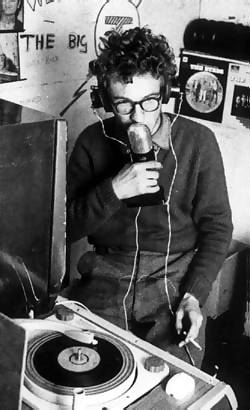 Chris G Real name Chris Gosling, he was part of the team of presenters heard on the programmes of one of the country's less successful offshore projects, Radio Tower. This
station was based on Sunk Head anti-aircraft fort, about ten miles off Walton on the Naze in Essex. There were grandiose plans for both a radio and television station. Chris was 19 years old, living in Ipswich, when he heard an
advert on Tower appealing for presenters. He visited their offices in Colchester and was offered a job. Radio Tower only lasted a few months and was off the air more than it was on. This was better than Tower Television which never
made it onto the air at all. Following his brief offshore career, Chris worked in sales and marketing. He now runs a video production company. There is an interview with him here and a video on
YouTube. (Many thanks to Chris for getting in touch. This photo taken by Martin Stevens and kindly provided by Chris
Edwards of Offshore Echo's. Does anyone have any recordings of Chris G on Tower?)
Chris G Real name Chris Gosling, he was part of the team of presenters heard on the programmes of one of the country's less successful offshore projects, Radio Tower. This
station was based on Sunk Head anti-aircraft fort, about ten miles off Walton on the Naze in Essex. There were grandiose plans for both a radio and television station. Chris was 19 years old, living in Ipswich, when he heard an
advert on Tower appealing for presenters. He visited their offices in Colchester and was offered a job. Radio Tower only lasted a few months and was off the air more than it was on. This was better than Tower Television which never
made it onto the air at all. Following his brief offshore career, Chris worked in sales and marketing. He now runs a video production company. There is an interview with him here and a video on
YouTube. (Many thanks to Chris for getting in touch. This photo taken by Martin Stevens and kindly provided by Chris
Edwards of Offshore Echo's. Does anyone have any recordings of Chris G on Tower?)
The Pirate Radio Hall of Fame needs your

The site is updated regularly and we are always on the look-out for new material to add. If you have any information, photographs, recordings or contact details for any of the disc-jockeys we haven't been able to
trace, please get in touch.
|
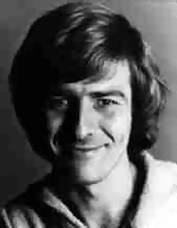 Roger Gale The only pirate DJ to end up helping to run the country was born in Poole, Dorset, on 20th August 1943. Roger studied acting at the Guildhall School of Drama.
However, as a descendant of Sir Francis Drake, he was a natural for life at sea and, in August 1964, joined Radio Caroline North, where he stayed until January 1965. In June he joined the south ship and became a Caroline
“Good Guy”. This was a gimmick borrowed from station WMCA New York and 2SM Sydney. The expression “disc jockey” was no more. The broadcasters were now all to be known as “Good Guys” and had
to wear their special uniform of blue and white check shirts, grey trousers and yachting jacket, available from all branches of Burton's the tailors! The station was suffering from the competition of Radio London's Top 40 format
and this was part of an attempt to update Caroline South's more middle-of-the-road sound. Unfortunately it did not work and another change in programme policy soon followed. There were staff upheavals and Roger moved on to join
Radio Scotland as Programme Director. He later also helped launch Radio 270 off Scarborough. His theme tune was Horst Jankowski's A Walk In The Black Forest. After
the pirates, he was a reporter on BBC Radio London and produced Radio Four's Today programme and Radio One's Newsbeat. He then switched to television, working on Thames TV's Magpie. He has been the Conservative
MP for North Thanet for many years. His website is www.rogergale.com. Roger was awarded a knighthood in the New Year Honours list 2012 for public and political
services. (Many thanks to Steve Kirby for providing some of the above information. Photo courtesy of Roger's website, reproduced with kind permission.)
Roger Gale The only pirate DJ to end up helping to run the country was born in Poole, Dorset, on 20th August 1943. Roger studied acting at the Guildhall School of Drama.
However, as a descendant of Sir Francis Drake, he was a natural for life at sea and, in August 1964, joined Radio Caroline North, where he stayed until January 1965. In June he joined the south ship and became a Caroline
“Good Guy”. This was a gimmick borrowed from station WMCA New York and 2SM Sydney. The expression “disc jockey” was no more. The broadcasters were now all to be known as “Good Guys” and had
to wear their special uniform of blue and white check shirts, grey trousers and yachting jacket, available from all branches of Burton's the tailors! The station was suffering from the competition of Radio London's Top 40 format
and this was part of an attempt to update Caroline South's more middle-of-the-road sound. Unfortunately it did not work and another change in programme policy soon followed. There were staff upheavals and Roger moved on to join
Radio Scotland as Programme Director. He later also helped launch Radio 270 off Scarborough. His theme tune was Horst Jankowski's A Walk In The Black Forest. After
the pirates, he was a reporter on BBC Radio London and produced Radio Four's Today programme and Radio One's Newsbeat. He then switched to television, working on Thames TV's Magpie. He has been the Conservative
MP for North Thanet for many years. His website is www.rogergale.com. Roger was awarded a knighthood in the New Year Honours list 2012 for public and political
services. (Many thanks to Steve Kirby for providing some of the above information. Photo courtesy of Roger's website, reproduced with kind permission.)
Roger Gale presenting the late night Party Time on Radio Caroline South on 18th September 1965. More from this programme here. Recording kindly provided by Sylvan Mason (duration 2
minutes 18 seconds)
Roger Gale on a short clip from an early Radio Scotland programme The Top 50 of 1965 and from a news bulletin on 2nd January 1966. Tape courtesy of Martyn Webster (duration 1 minute 3 seconds)
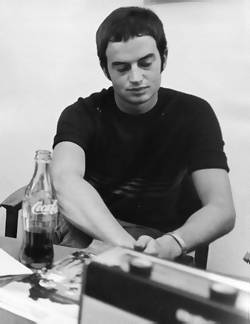 Stevie Gee. Born Stephen Hackett in Lewisham, south London, Stevie had a job in a production office in the city after finishing his education but also worked as a musician on
the side. After five years in the same job, he decided to go travelling and, after following a roundabout route, arrived in Amsterdam in 1967. He saw a story in a newspaper that mentioned Radio Caroline was opening an office in
the city so he and a friend, Malcolm Spencer, went to pay them a visit. Malcolm got work helping out in the office while Stevie was offered a job as a disc-jockey, despite never having done any DJ work before in his life! He
joined Caroline South at the end of August 1967 and presented the overnight show. Stevie can't remember exactly how long he was on board Caroline but Alan Hamblin, a correspondent to Hans Knot's radio report, gave the following
information: “Stevie Gee was on board the mv Mi Amigo from Tuesday 29th August until Tuesday 12th September 1967. For most of the time he was on the air from midnight until 6.00am.” Ray Robinson has a recording of
Johnnie Walker from a couple of days earlier, 27th August, in which he mentions Stevie being on the air that night so it looks as if Stevie might have started a little earlier than thought.
Following his time on Caroline, Stevie returned to Amsterdam where he shared a house with fellow broadcasters Carl Mitchell and Alan Clark, and worked as a disco DJ and
musician. He spent five years in Amsterdam, DJing in clubs and, while there, wrote a number of pop hits. He also appreared on some Caroline roadshows on the continent which he says were much better paid than his time on the ship!
In the early seventies he moved to Denmark and was DJ, compère and singer in a large club in Copenhagen called Revolution. He was a member of a successful Danish band called Life but was forced to return to the UK when his
father fell seriously ill and needed Stevie's assistance. Since then he says he has done a “straight nine to five job”. He has also been heard on Sydenham Community Radio. (Thanks to Stevie for telling us his story
and to his brother-in-law, Steve Skinner for putting us in touch. Thanks also to Pinky Siedenburg, who used to run Caroline's Amsterdam office, for providing this picture of Stevie. She says that his friend Malcolm also worked on
board Caroline South as a DJ “for about a day”. Does anyone remember this or what name he used on the air?)
Stevie Gee. Born Stephen Hackett in Lewisham, south London, Stevie had a job in a production office in the city after finishing his education but also worked as a musician on
the side. After five years in the same job, he decided to go travelling and, after following a roundabout route, arrived in Amsterdam in 1967. He saw a story in a newspaper that mentioned Radio Caroline was opening an office in
the city so he and a friend, Malcolm Spencer, went to pay them a visit. Malcolm got work helping out in the office while Stevie was offered a job as a disc-jockey, despite never having done any DJ work before in his life! He
joined Caroline South at the end of August 1967 and presented the overnight show. Stevie can't remember exactly how long he was on board Caroline but Alan Hamblin, a correspondent to Hans Knot's radio report, gave the following
information: “Stevie Gee was on board the mv Mi Amigo from Tuesday 29th August until Tuesday 12th September 1967. For most of the time he was on the air from midnight until 6.00am.” Ray Robinson has a recording of
Johnnie Walker from a couple of days earlier, 27th August, in which he mentions Stevie being on the air that night so it looks as if Stevie might have started a little earlier than thought.
Following his time on Caroline, Stevie returned to Amsterdam where he shared a house with fellow broadcasters Carl Mitchell and Alan Clark, and worked as a disco DJ and
musician. He spent five years in Amsterdam, DJing in clubs and, while there, wrote a number of pop hits. He also appreared on some Caroline roadshows on the continent which he says were much better paid than his time on the ship!
In the early seventies he moved to Denmark and was DJ, compère and singer in a large club in Copenhagen called Revolution. He was a member of a successful Danish band called Life but was forced to return to the UK when his
father fell seriously ill and needed Stevie's assistance. Since then he says he has done a “straight nine to five job”. He has also been heard on Sydenham Community Radio. (Thanks to Stevie for telling us his story
and to his brother-in-law, Steve Skinner for putting us in touch. Thanks also to Pinky Siedenburg, who used to run Caroline's Amsterdam office, for providing this picture of Stevie. She says that his friend Malcolm also worked on
board Caroline South as a DJ “for about a day”. Does anyone remember this or what name he used on the air?)
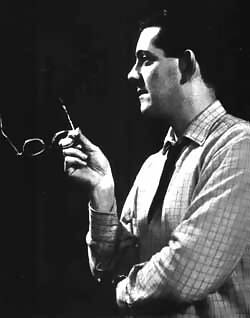 David Gibson was only heard occasionally on Radio Scotland but was very much involved behind the scenes. He has been in touch with The Pirate Radio
Hall of Fame. He says: “I've just came across your website, with myself listed among the Radio Scotland deejays, although I was more of an occasional broadcaster as my main job was handling the station publicity
and editing/publishing 242 Showbeat, a monthly glossy devoted to Radio Scotland. Almost all the Radio Scotland pictures on your site are familiar as I originally commissioned and published them. In August 1997 there was a
reunion dinner for ex-Radio Scotland staffers. We couldn't find very many - pity your site wasn't around then - but there was a major feature across the centre spread of the Glasgow Evening Times about the reunion, showing
those we did find Mel Howard, who flew in from Canada, Paul Young, Sheena Russell, Jimmy Mack,
Tony Meehan, Allen Mackenzie and myself.” (You can see the feature here.) Following his time with Radio Scotland, David says: “I
went back to newspapers (both station managing director Tommy Shields and I had previously worked for the Daily Express and Scottish Television, among other places) and retired in 1998.” (Many thanks to David for getting
in touch, providing the photo and bringing us up to date.)
David Gibson was only heard occasionally on Radio Scotland but was very much involved behind the scenes. He has been in touch with The Pirate Radio
Hall of Fame. He says: “I've just came across your website, with myself listed among the Radio Scotland deejays, although I was more of an occasional broadcaster as my main job was handling the station publicity
and editing/publishing 242 Showbeat, a monthly glossy devoted to Radio Scotland. Almost all the Radio Scotland pictures on your site are familiar as I originally commissioned and published them. In August 1997 there was a
reunion dinner for ex-Radio Scotland staffers. We couldn't find very many - pity your site wasn't around then - but there was a major feature across the centre spread of the Glasgow Evening Times about the reunion, showing
those we did find Mel Howard, who flew in from Canada, Paul Young, Sheena Russell, Jimmy Mack,
Tony Meehan, Allen Mackenzie and myself.” (You can see the feature here.) Following his time with Radio Scotland, David says: “I
went back to newspapers (both station managing director Tommy Shields and I had previously worked for the Daily Express and Scottish Television, among other places) and retired in 1998.” (Many thanks to David for getting
in touch, providing the photo and bringing us up to date.)
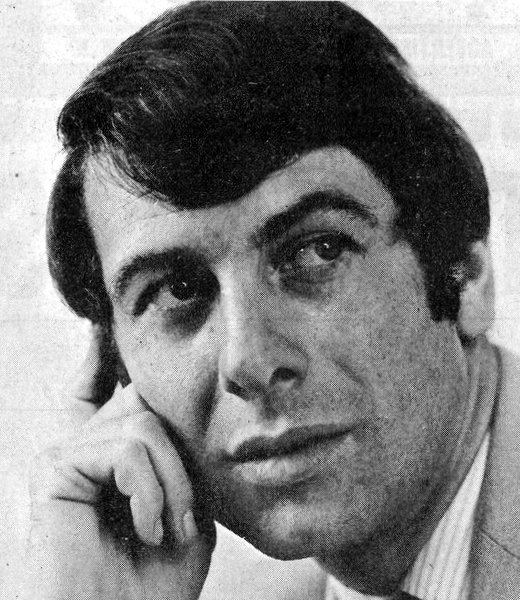 Graham Gill Born Graeme Gilsenan on 15th April 1936 in Melbourne, Australia, he started in radio at the age of 14 at Radio 3UZ in Melbourne. After about a year he transferred
to 3KZ where he worked as studio panel operator for Alan Freeman before becoming a broadcaster in his own right. From there he moved to Griffith in New South Wales, to 2RG as well as MTN-9 TV. At the end of 1965 Graham moved to
Europe and, like many Australians of his generation, ended up living in London's Earls Court. He found work at the Wimbledon Palais where, like Mark Roman before him, he got spotted by Radio London.
In May 1966 he joined the station, although his stay on the Galaxy was brief - just two weeks - before he was offered a job on the rival Britain Radio / Radio England operation. He also spent time on Radio 390 but when it closed
down visa problems forced him out of the country and he moved to Holland. Graham returned to sea during the seventies, working on both Radio Caroline and Radio Northsea International off the Dutch coast. (See
The Pirate Radio Hall of Fame ‘Seventies Supplement’.) Here he sang his theme tune live every night over the backing of an instrumental version of
Junior Walker's Way Back Home. When the Dutch introduced their anti-pirate legislation in 1974 Graham joined Radio Netherlands (the Dutch
equivalent of the World Service). He retired in 1984 but in 2002 was tempted back onto the air to present some shows on the short-lived Radio Caroline cable service in Holland. There are some pictures of Graham from his pirate past
in Look Boden's, Peter Berkeley's, Roger Scott's and David Sinclair's photo albums and some he took himself on Radio 390
here. There are also some more recent pictures taken at the 2005 Amsterdam Radio Day and the Radio Academy Celebration of Offshore Radio. Graham's
autobiography, Way Back Home: The Graham Gill Story, was published in 2010 by The Foundation of Mediacommunication. He died in his sleep at his home in
Amsterdam in April 2018, 6 days before his 82nd birthday. The Pirate Radio Hall of Fame's tribute to Graham is here. (Photo from ‘Radio
News’)
Graham Gill Born Graeme Gilsenan on 15th April 1936 in Melbourne, Australia, he started in radio at the age of 14 at Radio 3UZ in Melbourne. After about a year he transferred
to 3KZ where he worked as studio panel operator for Alan Freeman before becoming a broadcaster in his own right. From there he moved to Griffith in New South Wales, to 2RG as well as MTN-9 TV. At the end of 1965 Graham moved to
Europe and, like many Australians of his generation, ended up living in London's Earls Court. He found work at the Wimbledon Palais where, like Mark Roman before him, he got spotted by Radio London.
In May 1966 he joined the station, although his stay on the Galaxy was brief - just two weeks - before he was offered a job on the rival Britain Radio / Radio England operation. He also spent time on Radio 390 but when it closed
down visa problems forced him out of the country and he moved to Holland. Graham returned to sea during the seventies, working on both Radio Caroline and Radio Northsea International off the Dutch coast. (See
The Pirate Radio Hall of Fame ‘Seventies Supplement’.) Here he sang his theme tune live every night over the backing of an instrumental version of
Junior Walker's Way Back Home. When the Dutch introduced their anti-pirate legislation in 1974 Graham joined Radio Netherlands (the Dutch
equivalent of the World Service). He retired in 1984 but in 2002 was tempted back onto the air to present some shows on the short-lived Radio Caroline cable service in Holland. There are some pictures of Graham from his pirate past
in Look Boden's, Peter Berkeley's, Roger Scott's and David Sinclair's photo albums and some he took himself on Radio 390
here. There are also some more recent pictures taken at the 2005 Amsterdam Radio Day and the Radio Academy Celebration of Offshore Radio. Graham's
autobiography, Way Back Home: The Graham Gill Story, was published in 2010 by The Foundation of Mediacommunication. He died in his sleep at his home in
Amsterdam in April 2018, 6 days before his 82nd birthday. The Pirate Radio Hall of Fame's tribute to Graham is here. (Photo from ‘Radio
News’)
Graham Gill in the early hours of 19th June 1966 on Swinging Radio England (apologies for the night-time interference). Recording courtesy of the Offshore Radio Archive (duration 3 minutes 53 seconds)
Graham Gill on the Morning Requests show from Britain Radio in July 1966. Recording courtesy of Stuart Russell (duration 2 minutes 37 seconds)
Graham nearly a year later, on 14th June 1967, presenting the Lunchbreak programme on Radio 390. Recording shared by Paul de Haan on The Offshore Radio Club Forum
(duration 3 minutes 29 seconds)
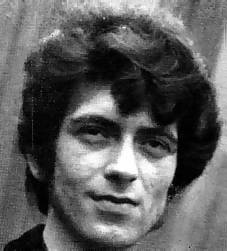 Roger Gomez (or Gomes?) Born in Whipsnade in 1942, Roger could have become one of the country's very first pirate disc-jockeys. As early as 1961 he
and Keith Martin were employed by a man called John Thompson to record programmes for a station he was planning called GBLN. It never made it onto the air so, instead, Roger forged a career for himself
in the music business as road manager for such artistes as Jet Harris and Millie Small. In 1965 John Thompson was involved in the launch of a new station, King Radio, and Roger was invited to join. He did not have an auspicious start:
he was stranded on Red Sands Fort, King's base, with his colleague Bruce Holland and a young helper with no food or drink. For ten days they lived on dehydrated peas. Despite the hardship he stayed with
the station as it evolved into the more successful Radio 390. In 1966 he transferred to Radio 270, off the coast of Yorkshire, where he broadcast as Roger Keene. His theme tune was
Cat's Squirrel by Cream. Roger was friends with a musician called Louis McKelvey. Louis moved to Montreal in October 1966 and, following his time at sea, Roger followed
him to Canada. They wrote a song together which was recorded as a demo by Influence (Louis' band) in June 1967 and then released as a single by a studio group called Marble Hall in 1970 (you can hear it on
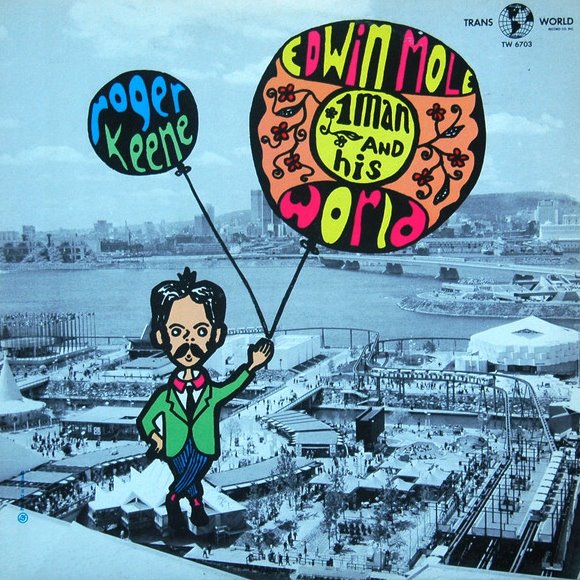
YouTube). Correspondent Nick Warburton tells us that Roger also released a comedy album in 1967 called Edwin Mole: One Man And His World (see cover below). He
says Roger worked as a writer for Circus magazine in Toronto in the late sixties under the name Roger Gaylord Keene. Another correspondent, Robert Ritchie, first met Roger in 1969/1970: “I'm not sure if he worked
for CBC Radio or not but, by the time I got to know him a bit better, he was at CFTO-TV in Agincourt, a suburb of Toronto.” In early 1972 Robert drove Roger across Canada to a new job at a radio station in Dawson Creek,
British Columbia. This was the first of a number of occasions when the two of them would set off on long overland journeys. The last of these was in 1982 when Roger was offered a job with the British Columbia provincial government and
Robert helped transport his belongings to Victoria, BC. Then they lost touch. Former Caroline DJ Steve Young got to know him around this time. He writes: “I met Roger when he was working as a Public
Information Officer for the Government of British Columbia here in Victoria. I owned a video production company at the time and Roger came in to see me one day to discuss production of a video for one of the government ministries.
This would have been in about 1985 if my memory serves me well. During the course of our conversation we discovered that we had both been disc jockeys on pirate radio stations. Over the next 12-18 months I kept in touch with Roger,
mostly about business although we did manage to grab the occasional lunch together. It was during one of our conversations that I realized that I'd heard Roger on one of my old alma mater radio stations, CKOV in Kelowna, British
Columbia, where he had worked, if I recall correctly, in 1973-1974 doing an evening show. He was partnered with his own personal producer and they worked as a team to put on the show. Funnily enough I'd just left my job at CKOV to
join another radio station, CKIQ, in Kelowan and I never did get a chance to meet Roger at that time, although he took over my time-slot at CKOV. Anyway, I eventually lost touch with Roger as I had sold my video production business
and moved on to other things in my life.” After reading about Roger on The Pirate Radio Hall of Fame, Robert Ritchie began investigating what had become of his old friend. Unfortunately he
discovered some sad news. It seems that Roger died from a brain aneurysm in 1988. (Nick Warburton writes: “I think his name may have been spelt with an S rather than Z at the end because I think he had Portuguese ancestery
but could be wrong.” Many thanks to Nick, Robert, Steve and Hans Knot for their help. This is a promotional photo issued by Radio 270. There is another picture of Roger in Guy Hamilton's photo album.
As well as the recordings below, you can hear more of Roger on the page of Mark Hammerton's tapes.)
Roger Gomez (or Gomes?) Born in Whipsnade in 1942, Roger could have become one of the country's very first pirate disc-jockeys. As early as 1961 he
and Keith Martin were employed by a man called John Thompson to record programmes for a station he was planning called GBLN. It never made it onto the air so, instead, Roger forged a career for himself
in the music business as road manager for such artistes as Jet Harris and Millie Small. In 1965 John Thompson was involved in the launch of a new station, King Radio, and Roger was invited to join. He did not have an auspicious start:
he was stranded on Red Sands Fort, King's base, with his colleague Bruce Holland and a young helper with no food or drink. For ten days they lived on dehydrated peas. Despite the hardship he stayed with
the station as it evolved into the more successful Radio 390. In 1966 he transferred to Radio 270, off the coast of Yorkshire, where he broadcast as Roger Keene. His theme tune was
Cat's Squirrel by Cream. Roger was friends with a musician called Louis McKelvey. Louis moved to Montreal in October 1966 and, following his time at sea, Roger followed
him to Canada. They wrote a song together which was recorded as a demo by Influence (Louis' band) in June 1967 and then released as a single by a studio group called Marble Hall in 1970 (you can hear it on
YouTube). Correspondent Nick Warburton tells us that Roger also released a comedy album in 1967 called Edwin Mole: One Man And His World (see cover below). He
says Roger worked as a writer for Circus magazine in Toronto in the late sixties under the name Roger Gaylord Keene. Another correspondent, Robert Ritchie, first met Roger in 1969/1970: “I'm not sure if he worked
for CBC Radio or not but, by the time I got to know him a bit better, he was at CFTO-TV in Agincourt, a suburb of Toronto.” In early 1972 Robert drove Roger across Canada to a new job at a radio station in Dawson Creek,
British Columbia. This was the first of a number of occasions when the two of them would set off on long overland journeys. The last of these was in 1982 when Roger was offered a job with the British Columbia provincial government and
Robert helped transport his belongings to Victoria, BC. Then they lost touch. Former Caroline DJ Steve Young got to know him around this time. He writes: “I met Roger when he was working as a Public
Information Officer for the Government of British Columbia here in Victoria. I owned a video production company at the time and Roger came in to see me one day to discuss production of a video for one of the government ministries.
This would have been in about 1985 if my memory serves me well. During the course of our conversation we discovered that we had both been disc jockeys on pirate radio stations. Over the next 12-18 months I kept in touch with Roger,
mostly about business although we did manage to grab the occasional lunch together. It was during one of our conversations that I realized that I'd heard Roger on one of my old alma mater radio stations, CKOV in Kelowna, British
Columbia, where he had worked, if I recall correctly, in 1973-1974 doing an evening show. He was partnered with his own personal producer and they worked as a team to put on the show. Funnily enough I'd just left my job at CKOV to
join another radio station, CKIQ, in Kelowan and I never did get a chance to meet Roger at that time, although he took over my time-slot at CKOV. Anyway, I eventually lost touch with Roger as I had sold my video production business
and moved on to other things in my life.” After reading about Roger on The Pirate Radio Hall of Fame, Robert Ritchie began investigating what had become of his old friend. Unfortunately he
discovered some sad news. It seems that Roger died from a brain aneurysm in 1988. (Nick Warburton writes: “I think his name may have been spelt with an S rather than Z at the end because I think he had Portuguese ancestery
but could be wrong.” Many thanks to Nick, Robert, Steve and Hans Knot for their help. This is a promotional photo issued by Radio 270. There is another picture of Roger in Guy Hamilton's photo album.
As well as the recordings below, you can hear more of Roger on the page of Mark Hammerton's tapes.)
We have recordings of Roger in both his guises:
Roger Gomez on King Radio, a tape sent by Stuart Russell (duration 1 minute 57 seconds). More from this programme can be found on the King Radio page.
Roger Keene on Radio 270 from 3rd August 1966. This recording was made, at some distance, by Martin Kayne listening in Folkestone, Kent. He included it on a tape he marketed
during the late sixties called A Salute To The Pop Pirates. This has been kindly passed on to us by Peter Heaton (duration 55 seconds)
The image on the right is the cover of Roger's album, ‘Edwin Mole: One Man And His World’, released in Canada in 1967. Picture courtesy of Discogs. Click on it to magnify.
 Bob Graham joined Radio Invicta, the low-powered sweet music station based on Red Sands Fort off the Kent coast, in December 1964. He arrived soon after
the tragic deaths of station boss Tom Pepper, engineer Martin Shaw and DJ Simon Ashley who had lost their lives when the station tender sank. He and a
friend were told by an acquaintance that Radio Invicta needed “two guys - unattached and looking for some adventure to become DJs.” Bob says “of course, we jumped at it!”. He and his
friend Garry Branden went out to the fort immediately and stayed with the station until it closed down the following February. He has very kindly written an account of his time with
Invicta for The Pirate Radio Hall of Fame. In July 2011 he published a book The
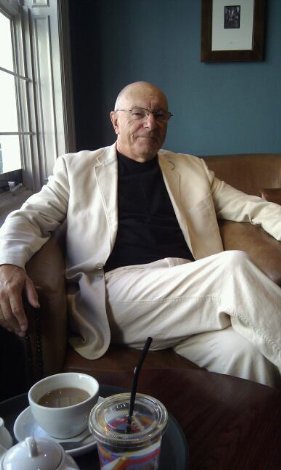
Mystic Stone under his real name, Graham Adams, which included a chapter set on Radio Invicta. (This is a recent photo, kindly provided by the man himself. Does anyone have a picture of Bob dating from his time
on Radio Invicta?)
Bob Graham joined Radio Invicta, the low-powered sweet music station based on Red Sands Fort off the Kent coast, in December 1964. He arrived soon after
the tragic deaths of station boss Tom Pepper, engineer Martin Shaw and DJ Simon Ashley who had lost their lives when the station tender sank. He and a
friend were told by an acquaintance that Radio Invicta needed “two guys - unattached and looking for some adventure to become DJs.” Bob says “of course, we jumped at it!”. He and his
friend Garry Branden went out to the fort immediately and stayed with the station until it closed down the following February. He has very kindly written an account of his time with
Invicta for The Pirate Radio Hall of Fame. In July 2011 he published a book The
Mystic Stone under his real name, Graham Adams, which included a chapter set on Radio Invicta. (This is a recent photo, kindly provided by the man himself. Does anyone have a picture of Bob dating from his time
on Radio Invicta?)
a very short clip of Bob on Radio Invicta's Lunchbox programme from 25th December 1964, early in his time with the station. This recording was made by the late Buster Pearson and has been
kindly provided by Keith King (duration 23 seconds)
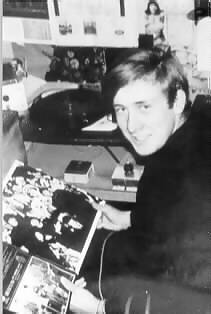 Martin Green was Radio City's Dutch DJ. He was born Martin Groenhorst in Schiedam (5 kilometres from Rotterdam) on 8th June 1944. He tell us: “I was studying Mathematics
at Leiden University and, during my studies, used to listen to the English pirate radio stations like Caroline and Big L. I also tuned in to Radio City. After hearing an advert for disc-jockeys, I responded (for fun) and wrote to
them. I received an answer, asking me to make a short tape of my voice announcing a record. So I did. I was very surprised to hear back that my tape was up to standard. I was invited to come to the station for a short trial period.
So I went out to Radio City for a week. But the weather was so bad that the supply boat could not come out and I was stuck on the fort for more than two weeks. For those two weeks the only other person on board was Paul
Elvey. He taught me how to be a disc-jockey. During that fortnight I received quite a lot of mail from listeners and after the trial period (station owner) Reg Calvert offered me more work on the
station. I did the DJ thing for about 10 months, going back to Holland after each visit, but after that returned to my studies. I met many disc-jockeys and technicians during those days: Paul Elvey, Chris
Cross, Dick Dixon, Alexander Dee, Johnny Flux and more. Also I remember (engineers) Tony Pine and
Don Witts, and Fred the skipper of the supply boat the Harvester. After my period on Radio City I became the manager of several beat groups and I promoted concerts with a number of well known Dutch
and English groups (Slade, Amen Corner, The Flowerpot Men, Blue Cheer, The Hollies, John Mayall - see below - and many more). I am now retired and enjoy traveling with my campervan!” Many thanks to Martin for his help.
Martin Green was Radio City's Dutch DJ. He was born Martin Groenhorst in Schiedam (5 kilometres from Rotterdam) on 8th June 1944. He tell us: “I was studying Mathematics
at Leiden University and, during my studies, used to listen to the English pirate radio stations like Caroline and Big L. I also tuned in to Radio City. After hearing an advert for disc-jockeys, I responded (for fun) and wrote to
them. I received an answer, asking me to make a short tape of my voice announcing a record. So I did. I was very surprised to hear back that my tape was up to standard. I was invited to come to the station for a short trial period.
So I went out to Radio City for a week. But the weather was so bad that the supply boat could not come out and I was stuck on the fort for more than two weeks. For those two weeks the only other person on board was Paul
Elvey. He taught me how to be a disc-jockey. During that fortnight I received quite a lot of mail from listeners and after the trial period (station owner) Reg Calvert offered me more work on the
station. I did the DJ thing for about 10 months, going back to Holland after each visit, but after that returned to my studies. I met many disc-jockeys and technicians during those days: Paul Elvey, Chris
Cross, Dick Dixon, Alexander Dee, Johnny Flux and more. Also I remember (engineers) Tony Pine and
Don Witts, and Fred the skipper of the supply boat the Harvester. After my period on Radio City I became the manager of several beat groups and I promoted concerts with a number of well known Dutch
and English groups (Slade, Amen Corner, The Flowerpot Men, Blue Cheer, The Hollies, John Mayall - see below - and many more). I am now retired and enjoy traveling with my campervan!” Many thanks to Martin for his help.
A very short clip of Martin on Radio City courtesy of Hans Stieper. Does anyone have a longer recording. Martin doesn't have any tapes himself. He says “I have been hoping to find some on the internet but so far, without
luck...” (duration 22 seconds)
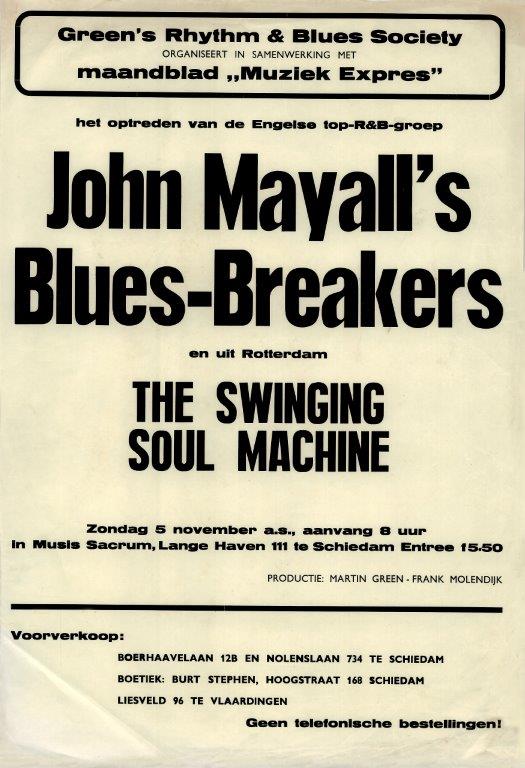
Thanks to Martin Green for this poster, from November 1967,
advertising one of the gigs he promoted.
|


