Back in the seventies Peter Steward worked as a reporter on a small weekly newspaper in Suffolk, The Beccles and Bungay Journal. One of his colleagues was a freelance photographer called Ric Turton. Ric
was mainly employed as a bus driver but took photographs in his spare time. He told Peter that he had once been a disc-jockey on Radio Caroline, where he was known as Ric Jonns. Peter interviewed Ric
about his time at sea and his career, both before and after Caroline. The conversation formed the basis for a feature in the newspaper (see over the page). The tape recording of the interview has long been
lost but, a few months ago, Peter found a transcript. He has kindly permitted The Pirate Radio Hall of Fame to publish it here. Ric joined Caroline South at the end of 1964 (where he used the name Chris
Jonns) but spent most of his offshore career on Caroline North. Sadly, he died in a car accident in 1985 at the age of 42, a decade after giving this interview. We start with an introduction from Peter:
|
|
|
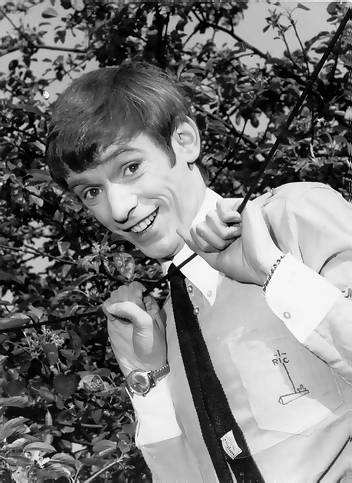
Ric Jonns. Note the picture of the Radio Caroline ship on his shirt pocket.
|
Peter Steward: “I had always been fascinated by the pirates as I had listened to Radio Caroline extensively as I grew up. To me this was the golden age of pop/rock radio. The age when we
were all younger and less wise. The radio was a great source of entertainment and these pirates were doing something never before achieved. They were bringing new pop music to us and paving the way for stations such
as Radio One. At the same time their DJs were becoming stars and cult figures in their own right.
Today the pirates seem old hat, but they were innovative, they were ground-breaking and they broke down the music rules and laws. Without them pop music would have been much poorer. I particularly enjoyed listening
to Radio Caroline and their competition Caroline Cash Casino. I often used to enter this contest which involved guessing a person or object from cryptic clues. The longer the competition went on the more the
prize money grew. I think I only ever got the answer correct once but wasn't quick enough getting my entry in. I remember the answer was Tommy Cooper's fez!
For me those were great days and undoubtedly played a major part in fuelling not only my love of music but my willingness to listen to all types and styles. I wrote an article for the Beccles and Bungay Journal
newspaper about Ric and his life, but took this a bit further by recording tapes of conversations I had with him. Sadly those tapes are long lost, but happily I did transcribe what he said and include this lengthy
transcription below.”
Ric Jonns: “I was born in Thorpe, Norwich, in 1943. At the age of three months I left Norwich. My father was a building contractor and would stay in one place for between two and five years.
I spent my infant life at two different places - Carlisle and then Manchester. My mother came from Norwich and my father from Yorkshire.
We moved to Barrow-in-Furness where we had the beauties of the beach in summer and I could enjoy the Lake District in the autumn and winter. I was there until the age of 11 when my father's contract to build a power
station finished and we went to Manchester. After leaving school I followed my father into the building industry. I took building as a subject at school and was quite happy with that. I always had a leaning, however,
towards entertainment, more from the production side than out front in the spotlight. I did lighting for school plays. For one production of Macbeth the lead part was taken by John Thaw. The school was in awe of his
performance. I produced youth club reviews, etc. and during that time I was working in the drawing office of the building company.
The company my father was working for built the first ten-pin bowling centre outside London. It was near Manchester and I spent considerable time there and got hooked on the sport. They were short of instructors and
I was taken on in that capacity during the evenings. I had been coached by the leading instructor. I was paid little but got the chance to do lots of bowling.
I saw advertisements for a ten-pin bowling controller (for an alley) in Oldham over the top of a ballroom. The ballroom would have pop record sessions which the resident band disliked intensely. This was in the early
1960s. Little Eva and the Shirelles was the kind of music being played.
|
|
|
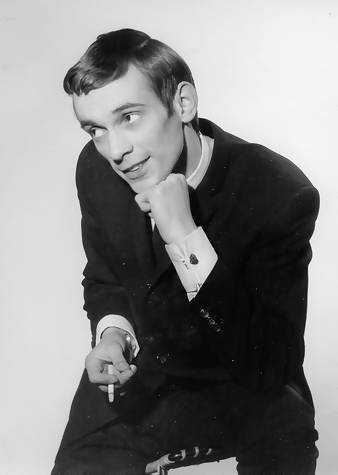
Ric Jonns.
|
I used to spend a lot of my time at the back watching the DJ in action. He was called Tommy Prince and later changed his name to Tony Prince.
I watched him and became aware of certain things that could be done to improve the disco. He went on holiday for a few weeks and I was the natural replacement. Taking the disco job meant I got sacked from the bowling
job. I later realised that the two departments came under different managers and they disliked each other. All I had done was to take my two weeks holiday from the bowling side to work at the ballroom.
One day I got the bus and went into Manchester to the Plaza Ballroom which was owned by Mecca. I saw their manager who was really into pop music. I said ‘do you want a really good DJ?’ and he replied he
was always looking for good DJs. My reply was ‘Well I am here then.’ That was the only time I have ever approached a job with a cheeky attitude.
I had an audition and everything went well and he took me on. Within a month I had become a full time DJ in charge of about six others. One of those was Dave Lee Travis. He insisted on
playing his own variety of obscure records because he liked them. When this happened everyone would leave the floor. I told him I didn't think it was good enough. I had to get DLT replaced because of his insistence.
Some time later I met him in the club. At the time he seemed very down and I put him in touch with Radio Caroline as I felt I owed him a favour. He got a job and about 18 months ago I saw him in London and he offered
to take me out to dinner. I really appreciated that. On Saturday nights in those days I used to get star billing. I can remember on one occasion getting an audience of 2,000. A few days later the Hollies played and
had only 1,800 there.
At the Plaza, Tuesday night was audition night. One Saturday we had a group booked but they dropped out and couldn't come. We had this group called Herman and the Hermits, who were due to audition the following Tuesday.
They filled in and got a tremendous reception from the people who had come to see the other group. It was a real storm. I was very impressed and at the end spoke to Peter Noone (Herman). He gave me telephone numbers
to contact him on. I told him the group were going to make it big and asked to become their road manager. Two months later I started in that position.
I bought a van and we toured Bolton, Southport, Wigan, the Cavern Club at Liverpool and other northern dates. We played with people like the Merseybeats, the Four Pennies, Del Shannon, Lulu and the Luvvers. Our big
break came with an audition at the Moonraker Club in Bolton. Mickie Most was coming up and he thought they were terrible. I thought Mickie Most's music was terrible so that made it quits. Nevertheless he asked us to
go to London for an audition. Mickie told Peter that he had to get rid of the group. He played us some remarkable tapes of sessions with the Animals, where all the tracks were laid down in one take and all became hits.
The following weekend in Bolton we went in for a band contest and came second. The Cymerons were first. I met Peter when he was 13. He was very intelligent. He soon became a very cunning person with a cut throat business
mind. He was ambitious and he could, at times, steamroller people. He fired the group when they came second and decided to go it on his own, but with two members of the original group. We went back to his house and the
four members of his group came round to see him individually. He made it known that the group would no longer be known as Herman and the Hermits but Herman's Hermits with him as employer. At that time I didn't get on
with the lead guitarist. He was a very snobby university graduate and he thought there was an alliance between me and Peter. He didn't like this and so he fired me.
I went back to the Plaza at Manchester. I was there one day when a man approached me and said he was starting a Manchester Cavern Club. He wanted me to manage it for him. I set the club up and it was a big success and
my name still seemed big enough to attract people. I had changed my name to Jonns when I went from the bowling alley into the ballroom. It seemed a good idea.
At this time Radio Caroline had just started up. It took me three months to pluck up the courage to contact them. I phoned up and used the same spiel as I had done before. I said ‘next to Jimmy Savile I am
the best DJ in the North of England. I've heard him and he's rubbish, you need me.’
That started it all. I then found out the programme controller wouldn't employ anybody who didn't like Georgie Fame. I didn't really know anything about Georgie Fame, but his secretary had tipped me off and given me
the name of a number of his records. Well he hired me. He gave me an audition and I was terrible, but the bloke seemed completely freaked out with something or the other.
He wanted me to report to Harwich almost immediately. So I returned to Manchester to get all my things together. Up to then I had never been to sea in my life. I went to Harwich at 7.30am in the morning. The other
DJs were already there. They included Doug Kerr and Simon Dee. I have nothing but the deepest respect for Simon Dee. He is one of the cleverest DJs I have ever
met. It is a shame he ever got involved in television. If he had stuck to radio he would have been so big.
We got on a converted trawler and set off for the Caroline South ship. It was a two hour trip. We got three miles out and I was violently sick. Suddenly there was a terrible commotion in the wheelhouse. They were
saying there was a gunboat next to Caroline. It was an American minesweeper and there was a 250 ft mast sticking up from it. We thought another radio station had been set up. Caroline was only 250 tons and by this
time water was shooting over the sides.
Once on board this great big bloke with a beard came out and said ‘you must be the new bloke’. I was hurled into the studio and taken through a door and suddenly realised I was on air. It was a really tiny
cubicle. It had a small table with a small microphone and a glass window. There was a guy on the other side pointing at me and that's when I realised I was on air. I took up the headphones and mumbled something about
how nice everything was and what a nice day it was. I was really petrified as I was speaking to 16,000 people.
After the programme I went downstairs to see what was supposed to be the record library. I also met Tony Blackburn and Simon Dee. At that time the DJs didn't put on their own records. You
had to learn the cueing systems and work for each other. The production experience was invaluable. I had a show in the middle of the day and some horrible jazz show. I can't stand jazz but I was told it was only for
a short time to fill in before I would be transferred to Caroline North. In those days I used to follow Tony Blackburn and in the evenings I helped Simon Dee to produce a special Winston Churchill memorial show. He took
a tremendous amount of time on that. I learnt editing and tape work from Simon. He was so hard working and dedicated - a real perfectionist.
The system was two weeks on and one off. On my time off I went to Manchester for personal tours. There were no laws against pirates at the time. The next step came when I reported to the Isle of Man. We went to Ramsay.
Going to the north boat was entirely opposite to the south. There was a Force 8 gale going and the boat was pitching up and down. We set out in a 25ft fishing boat with a wheelhouse and nothing else. We all got soaking
wet. The trip out took 35 minutes. It was impossible to judge the angle between the two boats or the height. One minute Caroline North was 35ft from the water level. It was a monster boat.
Our fishing boat was level with the water and this meant that at no time did the fishing boat go level with the Caroline deck. The captain of the tender tried to pull up alongside but he didn't think we would make it.
We got within eight foot of Caroline and we were rising and falling about 20ft and lurching about. The idea was that two guys on the tender would throw you like a sack of potatoes and two more on the Caroline would
try and catch you. You knew if they missed that would be the end of you and you would be killed in the water. As the new guy on board I had to be the first to make the fateful plunge. We did a circle and came back again.
On the second pass there was about 4ft of water between us when I jumped. I thought it was the end of the world! Luckily they caught me and I was chucked aboard again like a sack of potatoes onto the deck. The tender
never managed to get back again and had to go off carrying all my gear with it.
I remember Bob Stewart started on the same boat two weeks after me. The studio was large and you did the controlling yourself. It was a converted ferry boat that had carried 200 passengers.
We had a private cabin each and a free ration of two beers a day and 20 cigarettes. We got £30 a week so when you went off you went with £90.
On Caroline North we used to get a tremendous amount of fan mail. I still have three suitcases full of stuff I never answered. The tender came out twice a week and I made occasional trips to London to pick up records.
I met the English representatives of Jan and Dean and the Beach Boys. I was given an original set of Beach Boys records and played them on the air non-stop. The three artists I played the most were those two and Bob
Dylan. I had the 4-6pm show each day and we featured the West Coast sound. People seemed to like it and the show became popular. Bob Stewart was also very into American music and he played lots of Tamla Motown. He
introduced the American Hot 100 to an English audience for the first time.
|
|
|
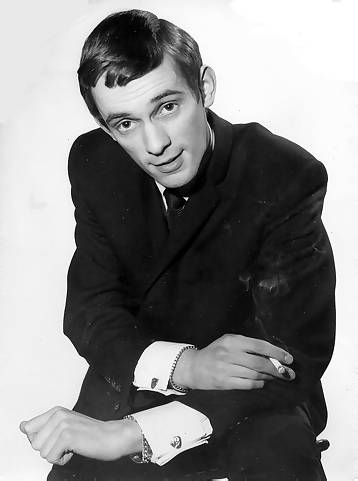
Ric Jonns.
|
On one trip home I met Peter Noone and he told me about a radio station in the States that was really looking for an English DJ. I was very interested in this as I had always
wanted to work in the USA. The station was in Winston Salem, North Carolina. I phoned them up from Liverpool and they put me on the air there and then. I accepted a job on the station and then had to get work visas
and in the end the only way to do that was to emigrate.
I was lucky in being a special commodity. It was difficult getting visas unless you were going to do a job that an American couldn't. Obviously an American couldn't be an English DJ.
The broadcasting was a total disaster. I was asked to broadcast to youngsters who had grown up with radio in the States. They had already had everything I could serve up. All my stuff was old hat, they knew it all.
Six or seven months later I was called into the boss' office. My novelty value had well and truly worn off. I didn't know anything about the town and I realised that a DJ really had to have his hand on the pulse of
the town and know everything about it and its people. I was competing against a local station and going on the air at the same time as a guy that was born and bred in Winston. I think I had about 20 listeners. The
station was WAIR Winston Salem. They were unhappy with me. I decided to look around for something else. I had no idea what I was going to do but I knew there was no future for me there.
Eventually I was put in touch with a DJ agent in LA. I went on the air in Winston and while I was broadcasting this call came from Phoenix, Arizona. It was a guy who was a west coast hustler type. I said I could be in
Phoenix the following Monday but he wanted me there on Saturday. I had to borrow some money and went via New Orleans on a Greyhound coach.
We arrived in Phoenix on Sunday morning and the town centre was totally deserted. It really was a shanty town. Everybody had moved out of the centre. There were only three buildings in the centre and they were the
court house, civic centre and television station and the YMCA. I phoned up the radio station and the bloke on the air didn't know anything about my arrival. Nevertheless I went along to the station.
The temperature at this time was 102. At the station I had to wait for him to let me in and he eventually asked me to go back in the morning. He gave me some money and I spent the night at the YMCA. By that time I
was filthy, fed up and frightened. The next morning I went back to the station and was ushered into the manager's office. He kept his back to me the entire time, staring out of the window. He had white hair and to
this day that is all I know about him. He said: ‘I have some bad news for you. We cannot employ you as you do not have a licence.’ I said that there had been no problem about that in the past as I thought
you only had to have a licence to read the meters. Eventually they decided that the only show I could do under such circumstances would be the early morning show. That suited me because it was the peak show.
I was given this apartment by the station and they found a mini car from somewhere. Being a mini it was not used to the high temperatures and continually overheated in the 120 degrees. Nevertheless I got free
hamburgers and clothes and had the 6 until 10am show. It was there that I got to know this guy whose mother had a swimming pool. At 10am I was usually free all day and I would spend the rest of the time lazing in the
pool and playing water polo, etc. Every weekend we went into the mountains. This was about 1966. At the time one of the guys at the station had a TV programme. It was based on cartoons for children but had a number
of slots that included satire and humour. It was a send up of the political position and beamed to LA. I did a few sketches on that show.
At this time they opened up a new club in Stockdale, Arizona, and they would get the most amazing groups such as Lovin' Spoonful and Them. At the time most of the American groups were dreadful. One night we had
the Mindbenders on tour. Their manager had previously been my agent while I was on Caroline. He was regarded in the business as a first class pig and when I approached him in the hall he walked straight past me. He
was playing the big manager of a pop group on tour game. At that time Eric Stewart of 10cc was in the Mindbenders. I worked three nights a week at the Fifth Estate Club and that went on for 8-9 months.
On one occasion Herman's Hermits were touring in LA. I travelled to see them. I met Peter at the airport and there was a terrific reunion. They went off to the Beverley Hills Hotel in Hollywood. As the drinking age
was 21 and Peter hadn't reached that I had to buy all his beer for him.
Peter Noone was due to appear at the LA Baseball stadium. We went to the concert in the evening by Wells Fargo stagecoach. I took with me tapes and equipment to tape the show for my radio programme. The stadium was
awful. There were wire and metal barriers erected to stop the kids going forward. Police were smashing the fingers of anybody that held onto the barriers and anybody standing up was quite likely to be attacked by
the police. In the middle of the concert an 11 year old kid ran down the centre aisle. He got to the front when the police jumped on him, knocking him to the floor. Peter was really upset by all this and stopped
the concert. It terrified him and after that he just disappeared for three days. He had gone off for a rest with the Mamas and Papas. When I got back to the station I never broadcast the tape.
Not long after this the station manager called us all in and told us the station had been sold to a country music outfit and we were all out of a job. I decided not to do anything for a while and just lazed around
in the sun.
After that I was on the dole. I realised, however, just how much money I had accumulated whilst on the station. Whilst there I hardly spent anything as clothes and food were mainly free. All my wages had been put
into the bank and I had never touched the money. I was amazed to find I had $200,000. Quite a bit of that came from backhanders from record companies for playing their music. Payola was rife. A record company would
approach me and say that if I played their record they would see me okay. I never thought anything about this and all the time the money was going into my bank account. I didn't bother to do anything for two months.
I went to L.A but couldn't get onto their radio set-up. Eventually I got a call from George Jay. He heard I was out of work and offered me a job at Dayton, Ohio.
When a top record station in the States welcomes a new DJ they really do it in style. They hold parties in the street. At first I worked on the sister station at Springfield, Ohio. I got a domestic flight to Chicago
and there I was met by a man, his wife and his enormous daughter. He had a private plane. So the three of us and this house got in. We had two runs down the runway but couldn't get off the ground. Eventually we had
to unload the luggage and that had to follow us. During that trip I took the controls of the plane and that was a fantastic experience. We arrived in Springfield and it really was a tiny place, a small farming
community and a little country radio station. They booked me into this horrible hotel and the shower and walls were full of green mould. I had been there three days when this promoter approached me. His wife invited
me to stay at their house 15 miles away.
Eventually I got on WING, Dayton, Ohio. It was a fantastic radio station with the studio facing onto the main street so members of the public could come and watch you while you were on the air. I loved that because
I could play to the public. I think I would still have been there if it hadn't been for another chapter in the story concerning another group.
|
|
|
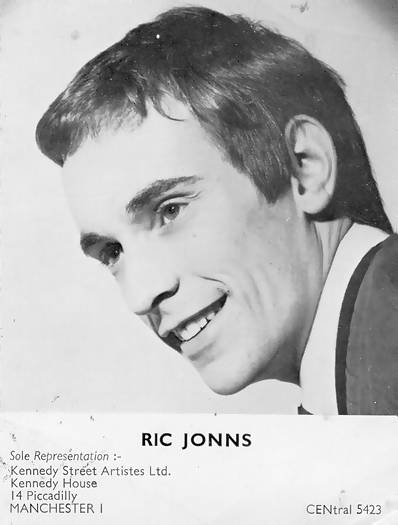
Ric Jonns.
|
One night I received a telegram from a bloke telling me about this group that were appearing at a local club I was due to appear at. They wanted me to be their manager. The
next time I went on the air I was conscious of four young faces and a tall man watching me. Unlike most people who watch for a few minutes and then go on their way, this group stayed for the entire show. At the end
the tall guy came up to me and said he was the person that had cabled me. The kids of the group he had talked about were 12-14. I said: ‘Why don't you go away and come back when they are 18-19?’ That
upset him and his reply was ‘We will show you’.
On the Saturday night I saw them at the club and they were fantastic. They played stuff from Sergeant Pepper and made it sound like the record. They were called the Parfidians and the lead singer certainly had
more talent and musical ability than Peter Noone. I was knocked out but kept cool and told their manager I would like to discuss the idea of managing them. So I went round to their house to meet their parents and
grand parents. They were all brothers!
Gradually I introduced them to music they didn't know about. This included stuff by the Hollies and they started singing like a mixture of the Hollies and the Beatles. They became well known in the area and started
breaking in the country as a whole. I got a record producer to come down and listen to them and he was suitably impressed. By this time they were taking up a lot of my time and the radio station was dropping a bit
and I let it go. I wasn't taking much time or effort over my programmes and eventually I had to decide between the group and the station. I felt I had enough money to finance them and so gave all my efforts to them.
We went off the New York to record and were booked into the YMCA. We were only there for a few minutes when one of the boys was approached. I complained about this to the record company and they booked us a suite
at the Waldorf Astoria. We went into the same studios where the Four Seasons had made their records. It was a machine really. They had their own set of musicians to lay down the tracks. We cut a number of tracks and
then went back to Dayton. It had been the first time the kids had been away from home and their parents met them at the airport. They wanted the kids to quit and told me they didn't think they were ready to lose
their childhood quite as quick.
I was speechless. I just sat around for a week. It was getting near Christmas at this time and I thought I would try and take two of the brothers on a trip of England as
1 I wanted to see the reaction over here to them
2 It might be the only opportunity they would get of travelling abroad and
3 It would give the parents a good chance to see what it was like without their kids. Eventually the parents agreed and I came home.
A circus clown once told me in the States that although I felt I wanted to get back to England, if I ever did I would soon want to return to America. That's exactly what happened. Once back I hated it. Everything
and everyone was so drab and nothing seemed to work. I was so depressed and glad to get back to the States.
I went back to see the parents but they hadn't changed their minds. At this time I was getting the kids bigger and bigger bookings. The parents decided that was it and the kids would stay at home. I tried to get
them back into the fold but it didn't work.
I ended up with a nervous breakdown from that. Before meeting the kids I was broadcasting on a number of separate stations at the same time. That meant long hours and long journeys between each. I was working
12-15 hours a day. It all built up and the crunch came after I came back from my holiday in England.
Added to this was the fact that in the meantime I had been married to an American girl. I must admit it wasn't a particularly big event in my life, it was just something that happened. She drove a van for another
group and we used to spend some time together and getting married seemed a good idea.
We were married about a month when she was killed. She came away from a club one afternoon. It was early evening and, instead of crossing the carriageway in the usual manner, she tried to cut a corner and turn
right. There wasn't much left of her or the van after it had been hit by a 16-wheeler.
That really put me in hospital with a mental breakdown. They were convinced I was crazy. When I was collected by ambulance from my room I was wearing English underwear and not the American shorts. This made them
think I was kinky. Added to this I had some paste pots in my room that I used for art work. Of course this made them think I was glue sniffing!
I was taken to a mental asylum and I was in there for three months at a cost of $100 a day. I had numerous mental tests and the rest of the people in there were geriatrics. It was sending me crazy being there,
knowing that I wasn't mad but trying desperately to prove it. In fact the more I tried to prove I was sane the more they thought I was mad. In the end I got out simply because I refused to pay their bills. I worked
out that it had been their idea to take me to this place so they could pay. It seemed to work. They must have thought that anybody that could talk about money must be fairly sane. It didn't stop them trying to sue
me for the money for three years.
The next thing I knew I was wandering around Prestwich Airport, back in England having been repatriated.
One of the stewardesses from BEA got me together at the airport because I was in such a daze after the gradual pile up of events. After that I was in a coma for nine days. My parents came to the airport to meet me
and I was convalescing in Manchester for a year. This was about 1969 and I spent the time making lampshades. I had a lot of things to work out but I still hoped to get back into the music business. Eventually I got
in touch with the local radio station in Manchester and the BBC. The answer I got was negative because they said I didn't have any journalistic background. I did some voice tests for the BBC as they were looking
for an announcer. My voice wasn't what they wanted, however.
A little later Keith Hopwood got into contact. He was one of Herman's Hermits. They had a lot of money and wanted to start some kind of business. They wondered if I had any ideas and then they wanted me to look after
it. I suggested making commercials and jingles. He put together a package for Granada TV. Eighteen months later they decided they didn't want them. We did the new type of commercials introducing slides with voices
over the top. It was a new style of co-ordinating voice and music and making short commercials of 15 seconds. We had a constant set of musicians to play on these and we composed the music for a children's puppet
show. I started auditioning musicians and singers for jingles and was very impressed by one particular singer called Christopher Neil. I signed him on a personal management contract and got him into the West End
production of Hair. Within a week he was understudying for the lead part and eventually he took the lead.
We cut an album and a single Close to You through Mickie Most's record label. I put all my remaining money into that album, but it didn't sell. Christopher later joined Paul Nicholas and dropped me as manager.
Now they are writing a number of hits together.
At this point I took over another young man - Keith Chegwin. He wasn't so hot as a singer but had a tremendously bubbly personality that was infectious. At first I turned him down but later changed my mind. It was
a failure because I was short of money and the company went bankrupt.
After I split with Chegwin I was looking for work. I met this chap who was handling the promotional and publicity side of Sunderland FC as a kind of commercial manager. Sunderland had just won the FA Cup and his
job was to get things free from various sources for the players. He phoned me and asked if I was interested in helping. I drove to Sunderland only to find all the players had left and a message was left asking me
to go up to Scotland. I didn't feel like doing that and so returned to London only to get a phone call asking me to fly to Scotland. That I did and had a super time fishing and playing golf.
The main job was to fix up a free honeymoon for D (player is named but name omitted). The Miami tourist board agreed to pay for a trip to Disney World. This was kept a secret from D. The commercial manager also
seemed to keep it from the papers and everyone else and forgot to publicise the event. I managed to get this huge Lion from Disney World to come down to present the tickets to D and his wife but it backfired slightly
because the wife didn't think much of being photographed in bed. Nevertheless they went to Disneyland.
After they left I was asked to pay the bill because this guy left without settling up. It all ended up with me being interviewed by the police and eventually I convinced them that I didn't know anything about the
payment. I was still left, however, with a £500 hotel bill and I had to borrow that from my father. That was another reason I joined London Transport - to give me a chance to pay him back.
So it was at this point that I decided I would have to go out to work. Ever since I had been at school I had been fascinated by buses. I tried to join London Transport and enjoyed a spell as a conductor. I decided
to become a driver and joined Eastern Counties at Lowestoft. I then applied to drive with London Transport but failed the test again.
At this point photography started creeping into my life again and I was submitting pictures for magazines. In this connection I met a Dutch guy in a bar one night and he asked me to go to Holland to take pictures
of a hotel chain. I spent six weeks in Amsterdam and only returned home when my mother was taken ill. Because she was ill I moved to Lowestoft again. I loved it by the sea and during the summer worked for Eastern
Counties. Then followed a job with Nightingales of Beccles and so to the present.
This is the first time in my life I have never had any particular ambition. I considered taking up teaching because I love working with kids. I think that would drive me crazy though. My main aim is to see a lot
more recognition in the media for children's activities. I don't think people really realise their potential and just what they can do if they are pointed in the right direction. A lot of the trouble surrounding
young people is because they are classed as kiddies and not talked to like adults.”
This interview has been edited slightly. We have taken the liberty of correcting what was probably a slip of the tongue. In the original, Ric mentioned a Caroline DJ he referred to as “Bill
Kerr”. Bill Kerr was the comedy actor best known in Britain for his appearances on BBC Radio's immortal Hancock's Half-Hour. Ric's colleague was Doug Kerr. We have amended the text accordingly. Ric mentions
“Prestwich Airport, back in England.” Does he mean Prestwick Airport - in Scotland?
Many thanks to Peter for the interview and to Sue Field for the photographs. The article Peter wrote about Ric is over the page.
Does anyone have a recording of Ric Jonns on Caroline North? Or of “Chris Jonns” on Caroline South. All we have been able to find so far is here. If you have a tape, please
get in touch.
|
